
The Yankees’ 2026 Bullpen: Depth and the New Power-Arm Philosophy
For much of the last decade, the New York Yankees have built their roster around a simple late-inning formula: power arms, swing-and-miss stuff, and relentless bullpen depth. From the “No Runs DMC” era to the velocity-driven relief units of the early 2020s, the organization has consistently prioritized strikeouts over contact. As the 2026 season approaches, that identity remains firmly in place, but with a new wave of hard-throwing arms and a deeper, more flexible bullpen structure.
A Power-Driven Late-Inning Core
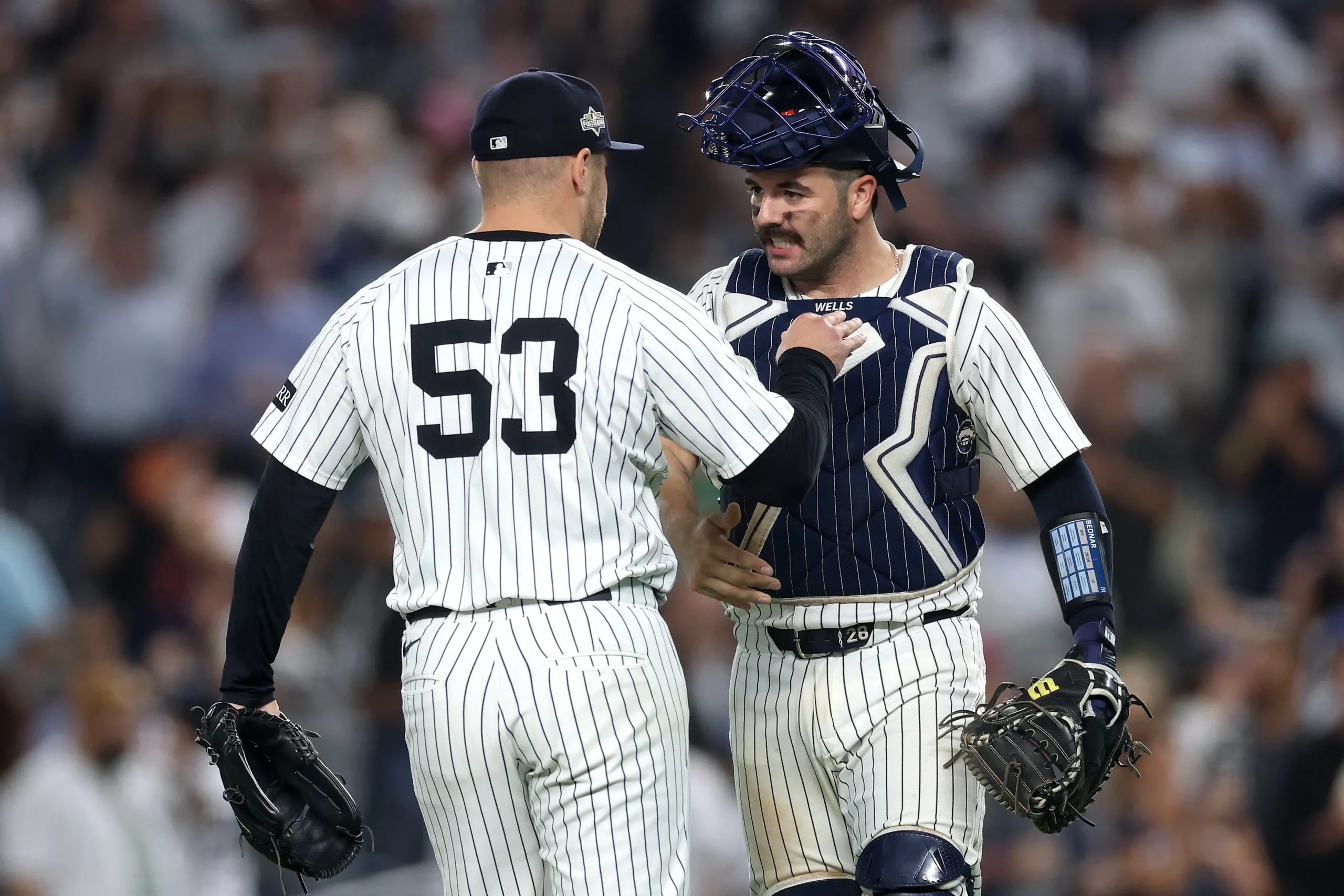
The projected 2026 bullpen is expected to revolve around a high-octane late-inning trio: David Bednar, Camilo Doval, and Fernando Cruz, with Tim Hill serving as the primary left-handed matchup option.
Bednar, acquired at the 2025 trade deadline, projects as the Yankees’ primary closer. Projection systems forecast a 3.23 ERA with 78 strikeouts in just over 60 innings, a dominant strikeout profile that fits the Yankees’ bullpen blueprint.
Doval gives the Yankees another elite power arm. Known for his triple-digit fastball and sharp slider, he is projected to post a 3.60–3.70 ERA range with more than 10 strikeouts per nine innings in 2026. His ability to miss bats in high-leverage spots makes him a natural fit in the late innings.
Cruz, meanwhile, has quietly developed into one of the most bat-missing relievers in the organization. In 2024, he produced a 37%+ strikeout rate and a whiff rate well above league average, placing him among the more dangerous swing-and-miss relievers in the American League.
Hill provides contrast to the power right-handers, offering a low-slot left-handed look and strong ground-ball tendencies. His role is less about overpowering hitters and more about neutralizing left-handed threats and generating weak contact in key spots.
Depth With Contrasting Profiles
Beyond the late-inning core, the Yankees’ bullpen depth reflects both power and versatility. Projected depth options include Angel Chivilli, Jake Bird, Cade Winquest, Ryan Yarbrough, and Paul Blackburn.
Chivilli represents the organization’s continued focus on velocity. The right-hander features an upper-90s fastball and the raw tools to develop into a late-inning weapon. His profile fits the Yankees’ modern bullpen mold: power stuff first, refinement later.
Bird offers a similar high-energy, strikeout-oriented profile, giving the Yankees another potential leverage option if his command stabilizes. Winquest, one of the organization’s more intriguing young relief arms, brings upside and the kind of velocity the Yankees have targeted in recent seasons.
While much of the bullpen is built around power, the additions of Yarbrough and Blackburn give the unit a different dimension.
Yarbrough, a soft-tossing left-hander with a history as both a starter and bulk reliever, provides length and deception rather than velocity. His ability to change speeds, induce weak contact, and cover multiple innings makes him a valuable bridge option, particularly when the rotation doesn’t go deep into games.
Blackburn offers similar versatility from the right side. A former All-Star starter, he brings experience, pitch ability, and the ability to work multiple innings if needed. In a bullpen increasingly built around short, high-intensity outings, pitchers like Yarbrough and Blackburn give the Yankees flexibility to manage workloads over a long season.
Velocity as the Organizational North Star
Despite the presence of a few pitch ability-focused arms, the Yankees’ bullpen philosophy still centers on one key trait: velocity. Recent acquisitions and internal development have consistently targeted pitchers with premium fastball speed and high strikeout potential. Even modest velocity gains have translated into significant performance improvements.
For example, a 2–3 mph jump in fastball velocity for certain relievers in recent seasons has coincided with strikeout rates climbing into the mid-to-upper-30% range—well above the league-average mark of roughly 22% for relievers.
This is the blueprint the Yankees continue to follow: acquire or develop pitchers with elite raw stuff, then refine their command and pitch shapes to unlock higher ceilings. Arms like Doval, Cruz, Chivilli, and Winquest all fit that mold. Each brings the kind of velocity and swing-and-miss potential that modern bullpen construction prioritizes.
Strikeouts as the Foundation
Modern bullpen success is built on missing bats, and the Yankees’ projected 2026 relief corps reflects that reality. Several key arms in the bullpen carry strikeout rates far above league average:
- Fernando Cruz: strikeout rate north of 35% in recent seasons
- David Bednar: consistently around or above 30%
- Camilo Doval: double-digit strikeouts per nine innings
With multiple relievers capable of generating elite swing-and-miss numbers, the Yankees are less reliant on balls in play and defensive outcomes. That approach reduces volatility and gives the bullpen a higher margin for error in tight games.
Flexibility Over Fixed Roles
Another hallmark of the Yankees’ modern bullpen is flexibility. Rather than assigning rigid inning-based roles, the club has increasingly deployed its best arms based on leverage. That approach allows the Yankees to attack the most dangerous parts of opposing lineups, even if it means using a closer-type arm before the ninth inning.
With several strikeout-heavy options—Bednar, Doval, and Cruz—the Yankees have the personnel to continue that matchup-driven strategy in 2026. At the same time, the presence of Yarbrough and Blackburn provides coverage for longer outings, extra-inning games, or short starts from the rotation.
A Bullpen Built for the Modern Game
The projected 2026 bullpen reflects a hybrid model. At the top, Bednar and Doval provide elite velocity and strikeout potential. In the middle, Cruz and Hill offer matchup versatility. At the depth level, Chivilli, Bird, and Winquest bring power-arm upside. And behind them, Yarbrough and Blackburn provide length and flexibility.
If even a few of those high-velocity arms take steps forward, the Yankees could once again field one of the most intimidating bullpens in baseball. In today’s game, where velocity, strikeouts, and depth dictate outcomes, the Yankees’ power-arm philosophy is not just an identity. It may be their most underrated competitive advantage in 2026.