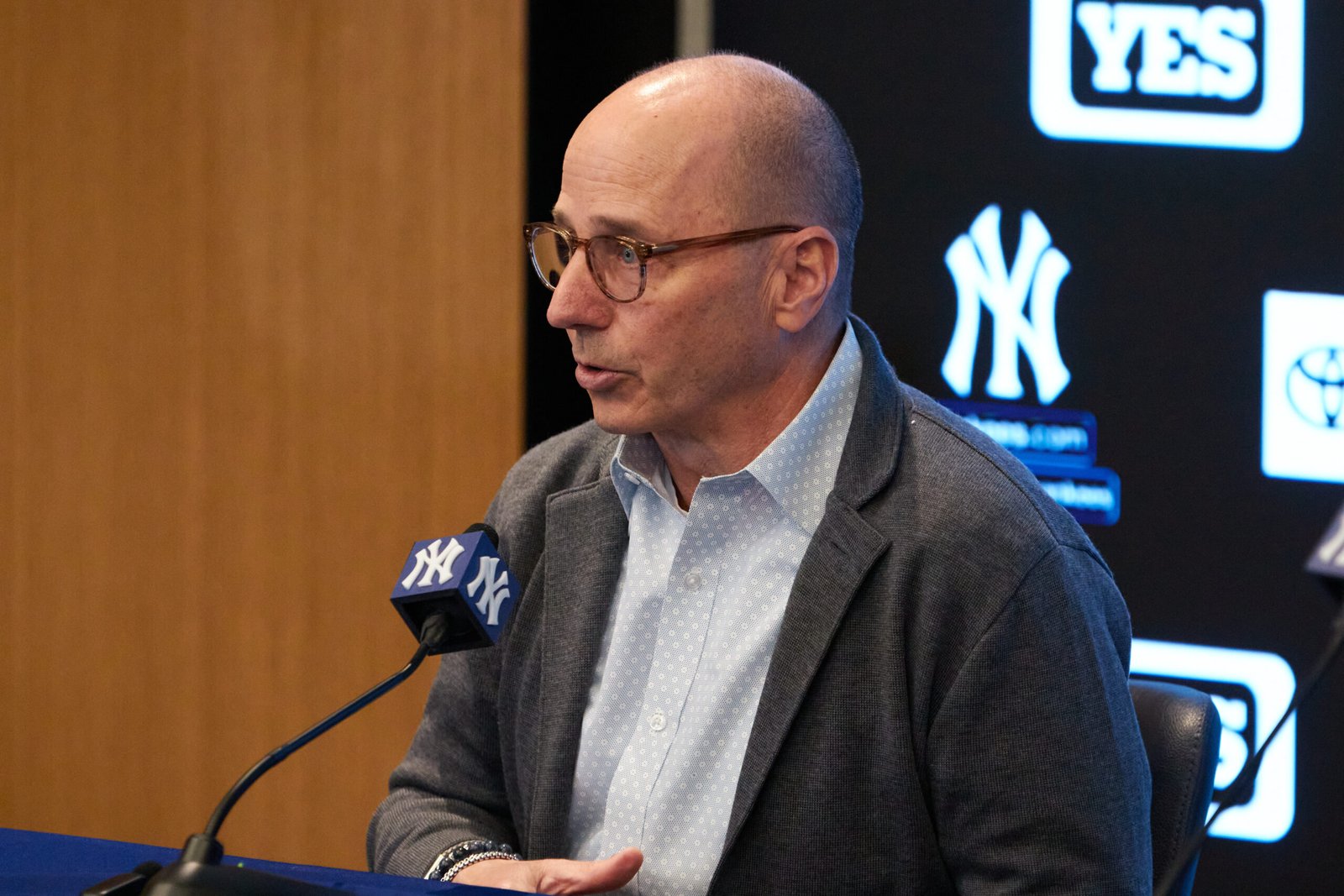
Spring training buzz in the Bronx has a familiar, electric crackle: after falling just short in 2024, this Yankee lineup feels even stronger. Brian Cashman has doubled down on his core stars and added smart pieces, yielding a roster that’s deep on paper and in the dugout. Picture a rotation with one of baseball’s best aces returning, a secret rookie flame thrower ready to break out, plus high ceiling prospects waiting in the wings. Imagine a defense featuring a Gold Glove third baseman, plus new outfielders and utilitymen who can turn routine outs into game-saving stops. Toss in a lineup that more carefully balances lefty and righty bats, cutting strikeouts and boosting contact, and you get a team built with modern analytics in mind. In short, the 2026 Yankees are loaded, versatile, and savvy. Here’s why this may be Cashman’s finest construction yet.
A Pitching Arsenal Deeper Than Ever
On paper the Yankees’ starting staff looks almost unfair. The rotation anchors remain two towering talents: Gerrit Cole (fresh off Tommy John surgery) and Max Fried. Cole, a recent Cy Young winner, is slated to return by early summer while Fried has been a model of consistency. But now New York boasts a full five man rotation right out of the gate. The surprise 2025 rookie, Cam Schlittler, has already earned fan icon status with his 12-strikeout playoff gem and triple-digit heaters. Alongside him are stalwarts Luis Gil and Will Warren, each expected to eat innings after proving their mettle. New offseason additions like Ryan Weathers (acquired via trade) and returning veterans Ryan Yarbrough and Paul Blackburn bolster the mix. Depth is the buzzword, but if Cole or anyone else falters or gets hurt, a healthy Carlos Rodón (back by April/May) and prospect Carlos Lagrange (triple digit fastball ready) are waiting in the wings.
Five reliable arms: Cole, Fried, Schlittler, Gil, Warren (plus Carlos Rodón and Clarke Schmidt also coming off IL).
Prospects in the pipeline: Lagrange, out of bullpen prep, and others (e.g. Elmer Rodriguez) add potential reinforcements.
Result: More innings per starter means fresher bullpen down the stretch, a luxury Cashman didn’t have in past seasons.
This depth means the Yanks should face fewer “off” days and patchwork bullpen innings. In 2025, falling behind often required shaky multi-inning relievers. In 2026, every fifth day Boone can hand the ball to a big league starter. That’s historically correlated with better team ERA and fewer second half collapses. Simply put, even without waivers, Cashman has assembled a staff that might feature eight MLB-quality starters (counting midseason returns and Ryan Weathers), arguably his best yet.
Sharpened Defense and Bullpen Backbone
Behind these arms is a defense that’s as imposing as the lineup. New(ish) third baseman Ryan McMahon, a four-time Gold Glove finalist with Colorado, replaced a cluster of weaker defenders and instantly upgrades the hot corner. Paul Goldschmidt at first base is no slouch either, especially against tough lefties. In the outfield, Trent Grisham (a superb gloveman) patrols center, flanked by Aaron Judge and Cody Bellinger, both proven catchers of the ball. The infield is nearly airtight: even with shortstop Anthony Volpe out in early April, Yankee stolen base champ José Caballero can handle it until Volpe’s May/June return. And at second, look no further than the toolsy All-Star and free agent to be Jazz Chisholm Jr.
Key defenders: McMahon (3B), Grisham (CF), Judge (RF), Bellinger (LF) Goldschmidt (1B), Volpe (SS), Chisholm Jr. (2B), Caballero (versatility).
Better range, more outs: Early indicators show the team shifting more intelligently, turning would-be hits into outs on stat-driven defensive alignments.
On the pitching side, the bullpen has also been remade. Though Luke Weaver and Devin Williams have moved on to pitch for the Yankees cross-town rivals, New York brought in David Bednar and Camilo Doval (high-leverage veterans) and re-signed Paul Blackburn and Ryan Yarbrough (experienced journeymen). Analytics guys love matchups, and Boone will have fresh options for lefty-on-lefty or righty-on-righty showdowns. With ace level keys (Cole, Fried and Rodón) eating big innings, the bullpen can focus on shorter stints. Put simply, the Yanks will be stingier with runs: strong defense will convert hits into outs, and a deeper, more tuned bullpen will snuff rallies.
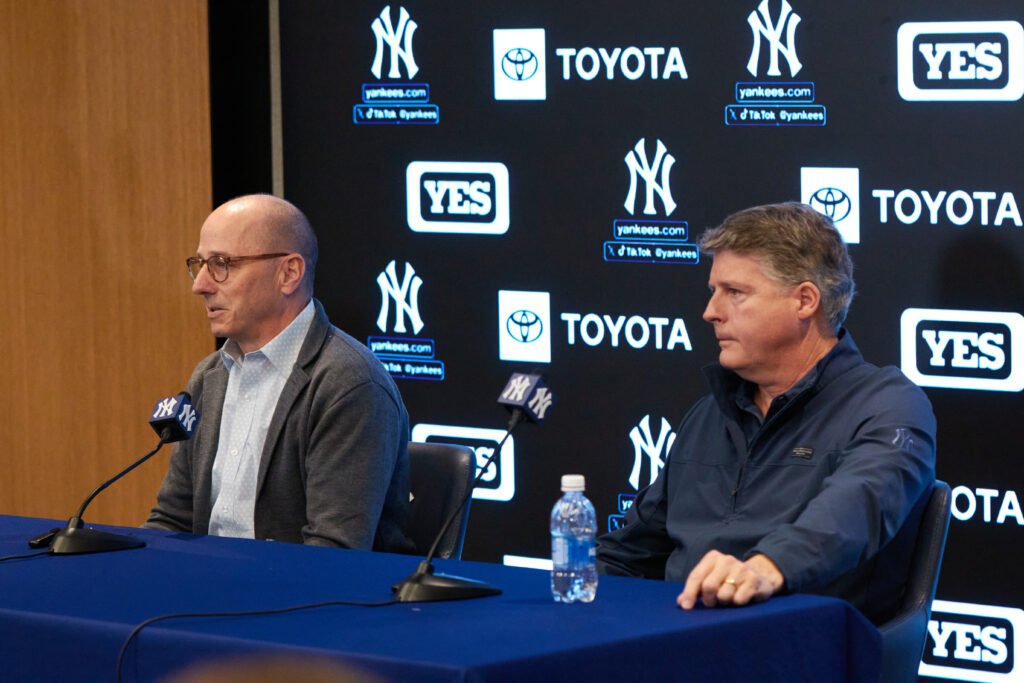
A Balanced, Contrast-Rich Lineup
Brian Cashman’s Yankees haven’t always been known for balance, but the 2026 lineup is designed to avoid lopsided exposures. Consider lefty–righty distribution: Bellinger, Grisham, McMahon, Ben Rice, Chisholm Jr. and Austin Wells, all left-handed hitters, will face most right-handed pitching. Then Judge, Giancarlo Stanton, Ahmed Rosario, Caballero and Goldschmidt, Volpe (when healthy) spark the righty side of the order. The mix ensures opponents can’t ride a single handedness to platoon-advantage wins and provides Boone with a much deeper bench than prior seasons.
Star power and contact: Judge, Stanton and Bellinger supply the homers, but New York also has plenty of contact hitters. Speedy Caballero (career .290 average vs. lefties), scrappy Rosario (high-contact lefty killer), and even Volpe (when back) emphasize putting the ball in play.
Fewer strikeouts: The coaching staff has drilled in adjustments. New third baseman McMahon narrowed his batting stance this winter to stay on pitches and cut his K-rate. Grisham, Goldschmidt and Judge, known for elite plate discipline, stabilize the lineup’s approach. The result: the team aims to whiff less often than the recent AL average, trading some pure power for more consistent pressure on the defense. It’s a lineup built for synergy: righties and lefties working in tandem, power guys who can walk or hit, and “glue guys” who ensure every at-bat counts.
Smarter Construction: Data Meets Intuition
Ultimately this roster shows Cashman and the brain trust are buying into an analytics-driven philosophy. Every signing and promotion seems geared to exploit numbers. Take Platoons: Goldschmidt is a 38-year-old, eight-time All-Star who now defers to Rice in most matchups. Data says Rice obliterates righties in the minors, so he’ll start against them; Goldy’ll fill in versus tough lefties. The Belt-typical first base platoon is textbook Moneyball. The bench is similarly specialized – Grichuk and Rosario were brought with one job: crush left-handed pitchers if they appear.
Defensive shifts and launch-angle work also figure prominently. Pitchers and infielders are routinely “positioned” for each batter in spring games, based on spray charts and hitters’ lean. Coaches have teammates using sabermetric tools to finetune swings (witness McMahon’s offseason tweaks). Younger arms like Lagrange and Rodriguez could receive big-league call-ups because the data said their stuff (triple-digit fastballs) and maturity could play immediately. In years past the Yankees gambled on older veterans; now they’re blending proven stars with up-and-coming talent hungry to prove themselves.
In short, this isn’t a patchwork of mercenaries. It’s the same core that nearly won the top seed in the American League, complemented by cost-effective veterans and internal stars-in-waiting. Cashman has stacked the lineup, shored up weak spots, and filled roles based on splits and statistics, not just name value.
All the pieces suggest 2026 will look different from 2025. The starting rotation alone might lead the league in strikeouts per nine innings. Defensively, routine plays will be made more often, and the Yankees will turn the ground ball or soft contact into outs at a higher clip. Offensively, the likes of Bellinger (.900+ OPS in 2025) and McMahon (narrower stance for more contact) ensure the middle of the order can both mash and put the ball in play. And every roster move, from re-signing Cody Bellinger to scouting the top prospects were underpinned by data analysis and hard scouting.
Cashman is betting on this mix of talent, analytics, and depth. If nothing else, it’s the most thoughtfully constructed Yankees team in years, one built to dominate all facets of the game. And for fans who live for the drama of October, that combination of storytelling heroes and number-crunching strategy just might deliver the best Bronx Bombers in nearly two decades.
Comments are closed