

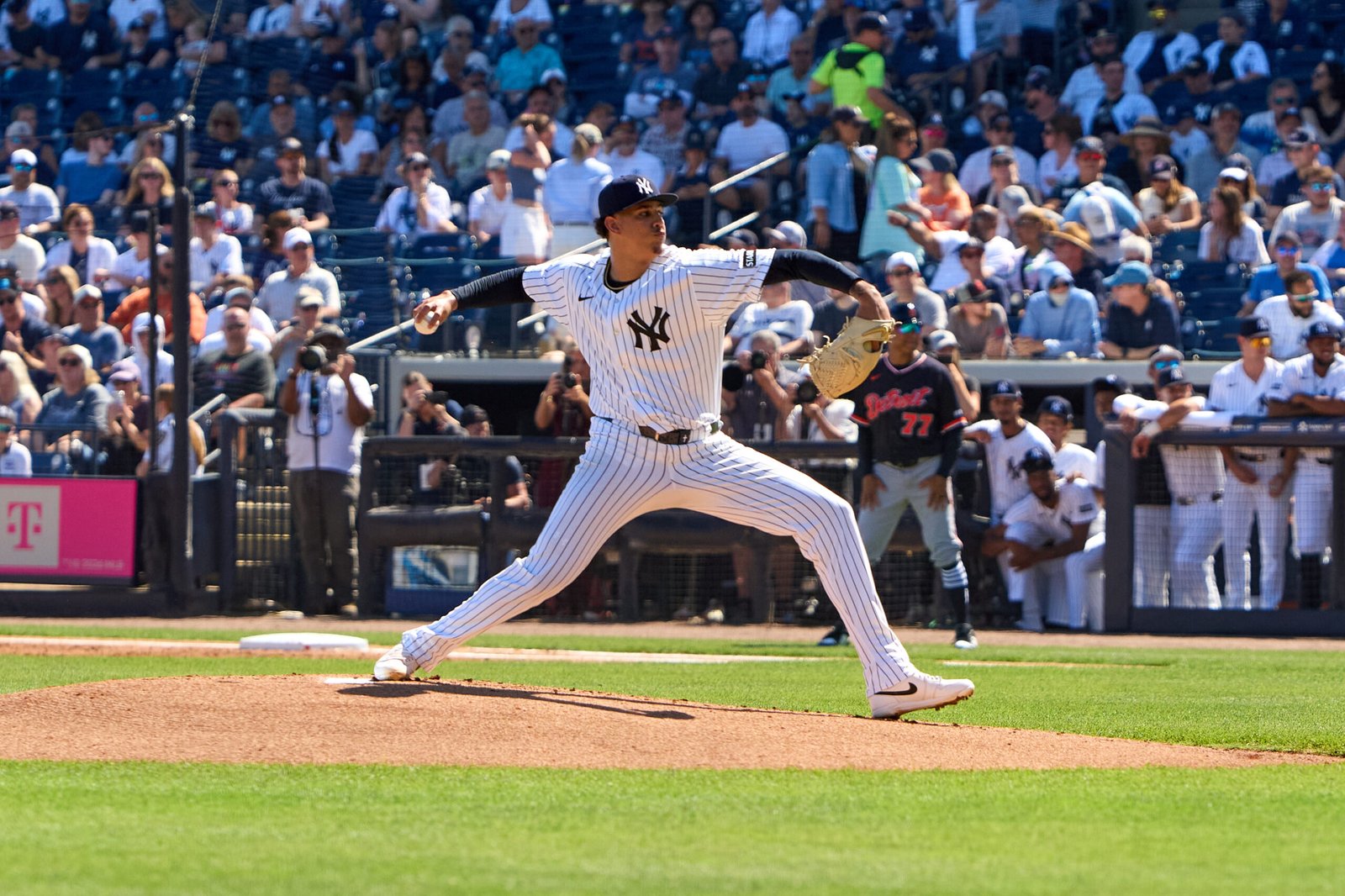
Similar to how the Yankees tend to draft domestically either from the Pacific Coast or from SEC schools (think Ben Hess and Aaron Judge), they also have a number of very tall pitching prospects.
Righty flamethrower, Carlos Lagrange (top pitching prospect and #2 Yankees prospect per Pipeline), has been the talk of Tampa the past month and change, and for good reason. Lagrange averaged 101.5 MPH on his relief outing on Wednesday night, and has earned a 0.93 ERA over 9.2 IP (3 games), including a K/9 of 8.38 and a BB/9 of 2.79.
Lagrange has made significant strides in improving his pitch quality, plus a small uptick in velo since he was in Low-A Tampa in 2024. In some respects, comparing a season in Low-A to a Spring Training game is the most lateral comparison given both situations were on the same mound.
Below are comparisons of the relief appearance on Weds. March 11 to a start on Sept. 7, 2024 with Tampa (coincidentally, against the Dunedin Blue Jays).
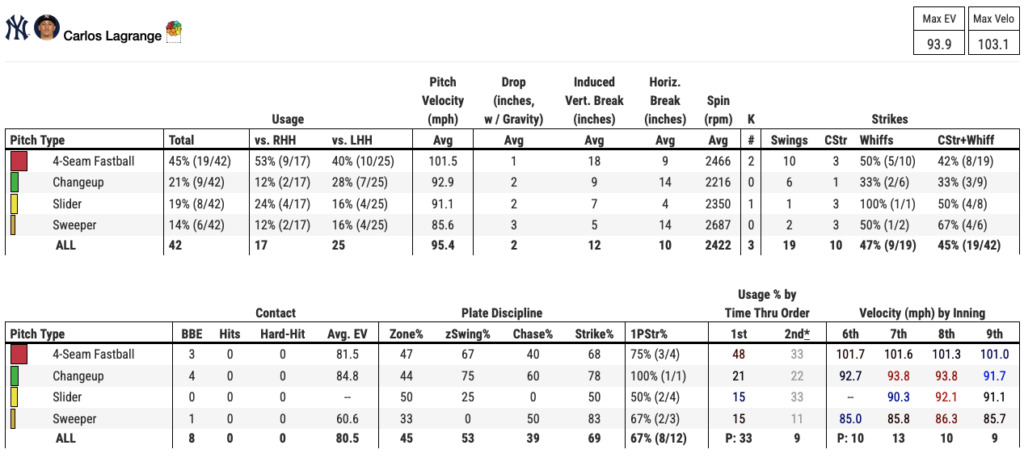
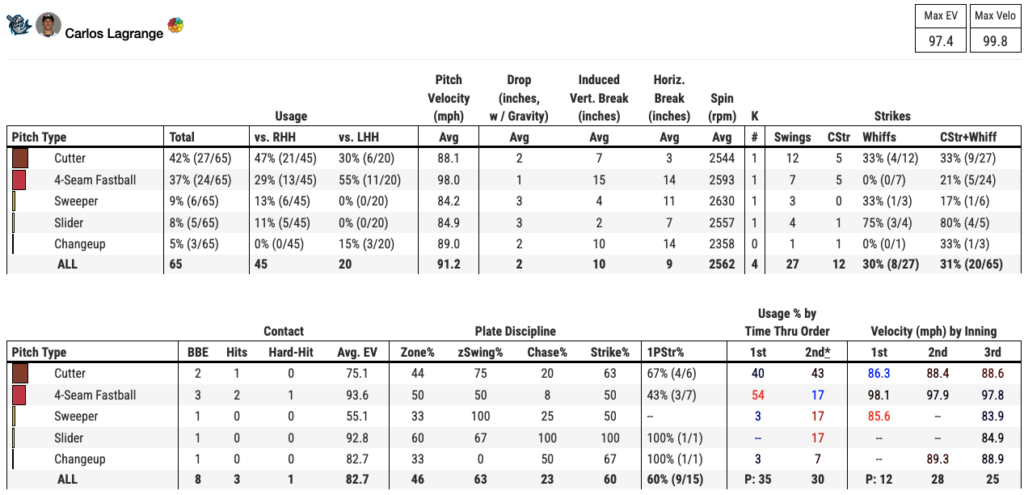
Looking at just this pitch data, Lagrange eliminated the cutter, which likely makes the change-up more effective. He still leans heavily on the four-seamer, but now mixes in the off-speed pitches a bit more, which induces more whiffs. In fact, his whiffs went up from 30% in 2024 to 47% in the most recent outing.
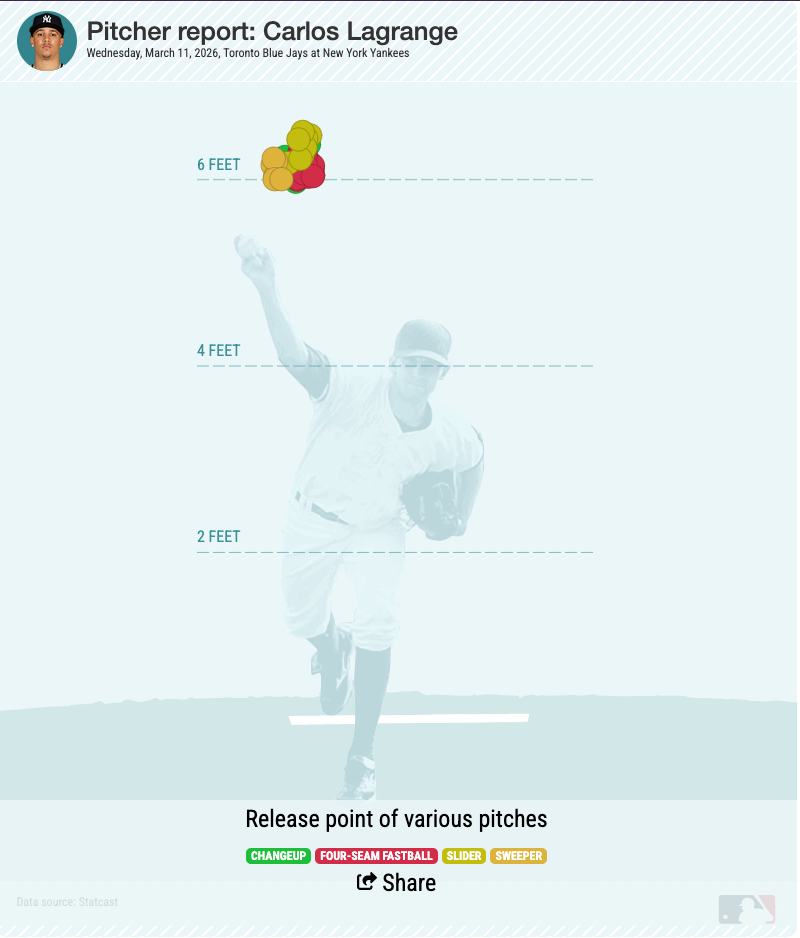
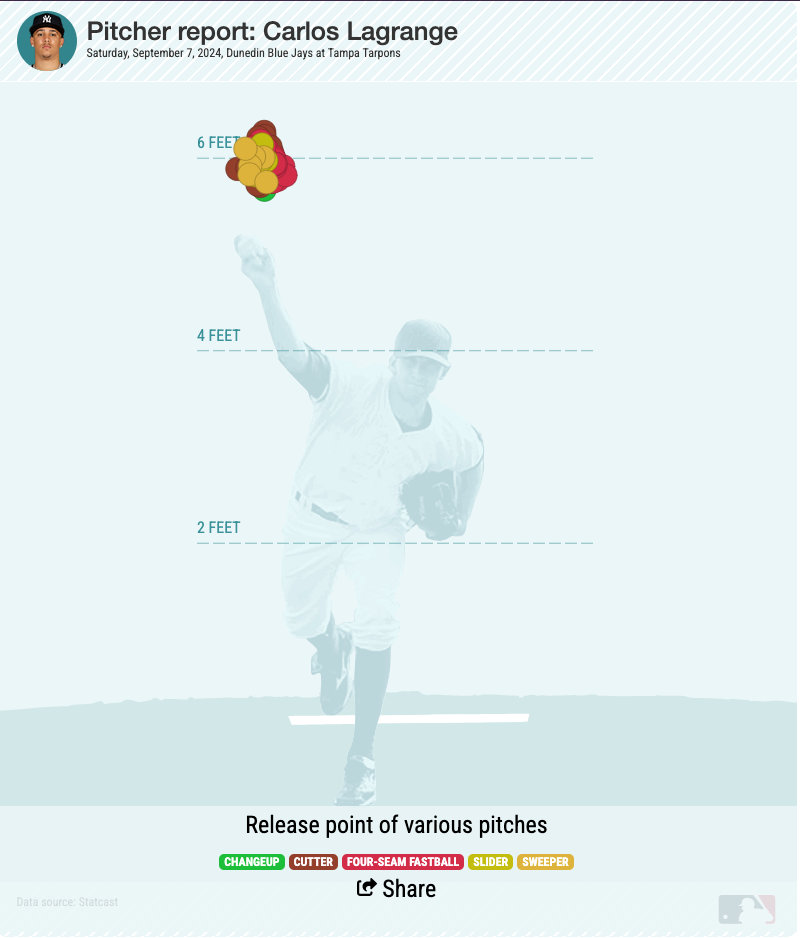
This graphic comparison above doesn’t show much other than that he is more consistent with the release point of his pitches, and they have raised the angle of release for those pitches compared to two years ago. That higher release point may be responsible for the higher velo bump due to mechanics and his size.
Lagrange still has a way to go with development, and it’s likely best that he spends a little time in Triple-A Scranton to start the season, but I wouldn’t be surprised if he was called up to the Bronx before the All-Star Break.
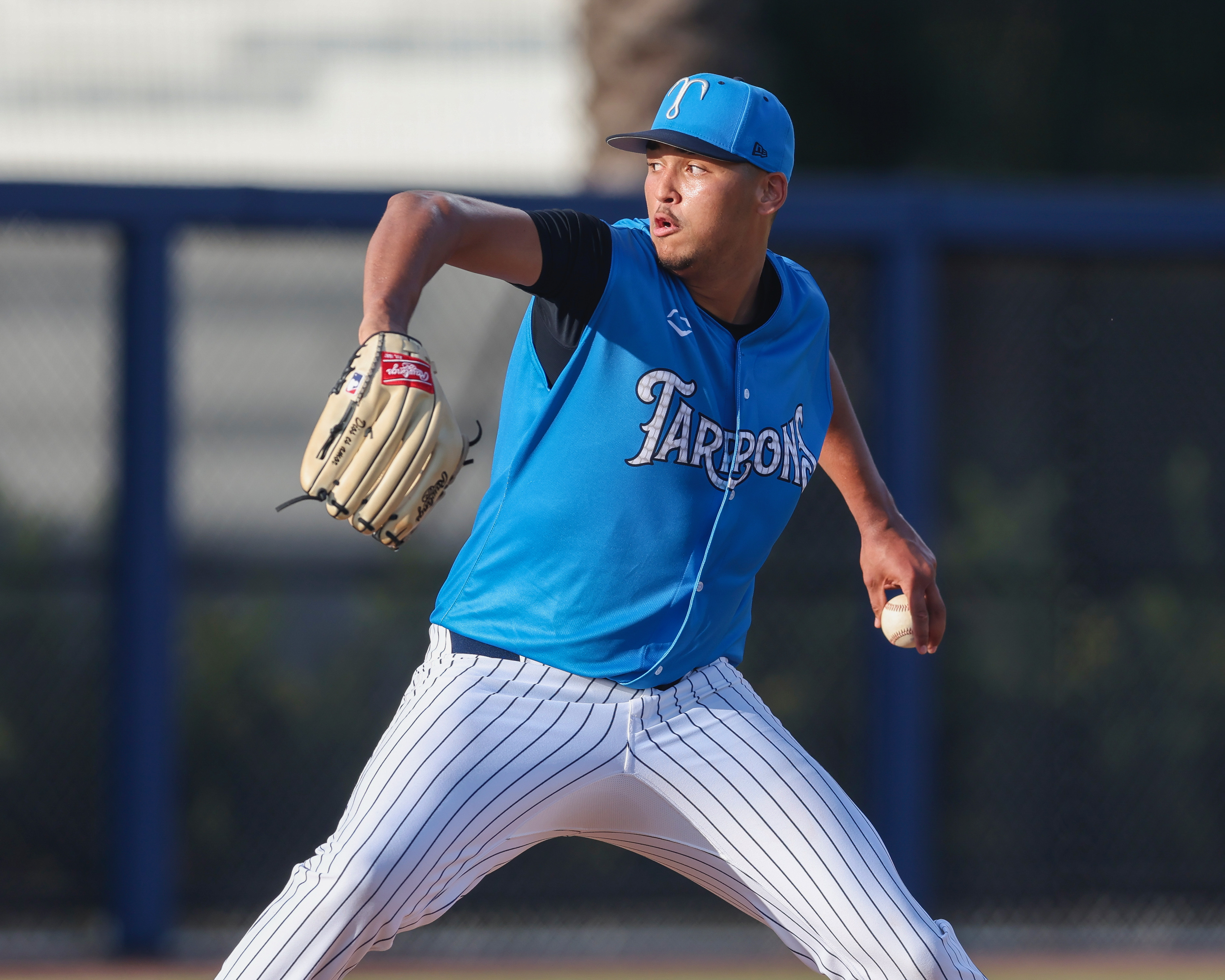
However, internally there’s lots of buzz surrounding southpaw Henry Lalane, who missed much of the 2025 season due to a shoulder injury, and is 6-foot-7 like Lagrange. They each have different mechanics and release points despite the size similarities, but the internal expectation is that Lalane can fly through the system this year if he can command the ball properly and if he can stay healthy.
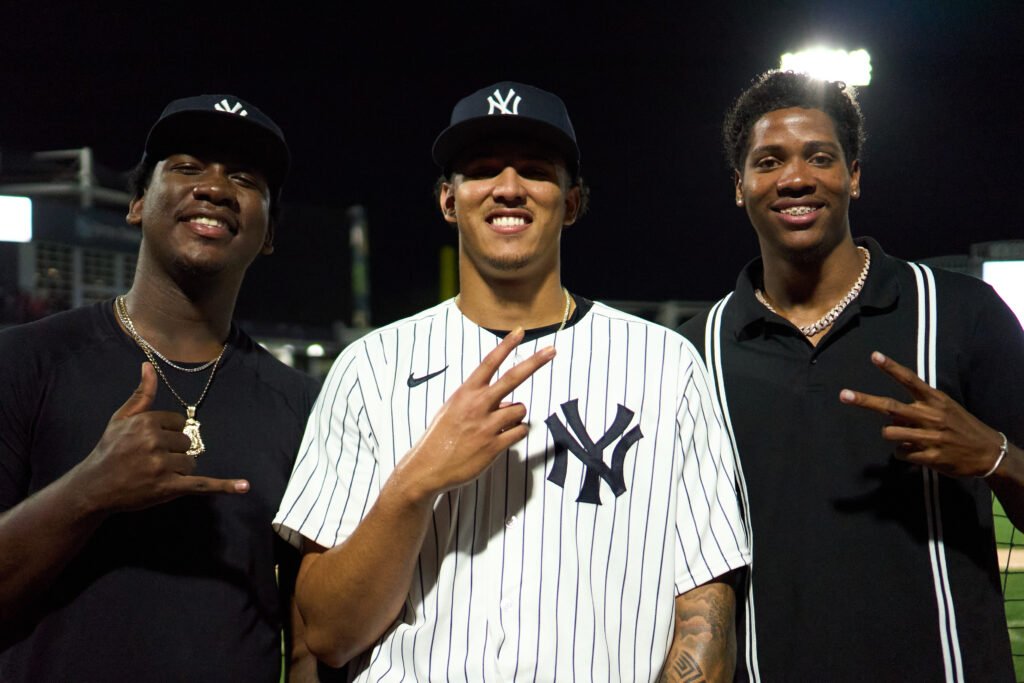
Additionally, Jerson Alejandro, a 6-foot-6 right-handed pitcher is back after missing all of 2025 and has yet to make his stateside debut. Alejandro, who likes to go by “King Kong”, had a solid 2024 season with the DSL NYY Bombers, striking out 13.62 per 9 IP, but walked 8.12 per 9. He briefly appeared on the back fields last year for Spring Training at the Himes complex, but ultimately missed all of the 2025 regular season. He should be back in time for the FCL season, if he doesn’t get the bump up to Low-A to start the season.
The shortest of the three pitchers shown above is 6-foot-5 right-handed pitcher Sabier Marte. Marte also missed all of 2025, but had an exceptional season the year prior in the Complex League, throwing a 2.76 ERA in 49 IP (12 G, 5 S). He also recorded a 8.08 K/9 and 2.94 BB/9.
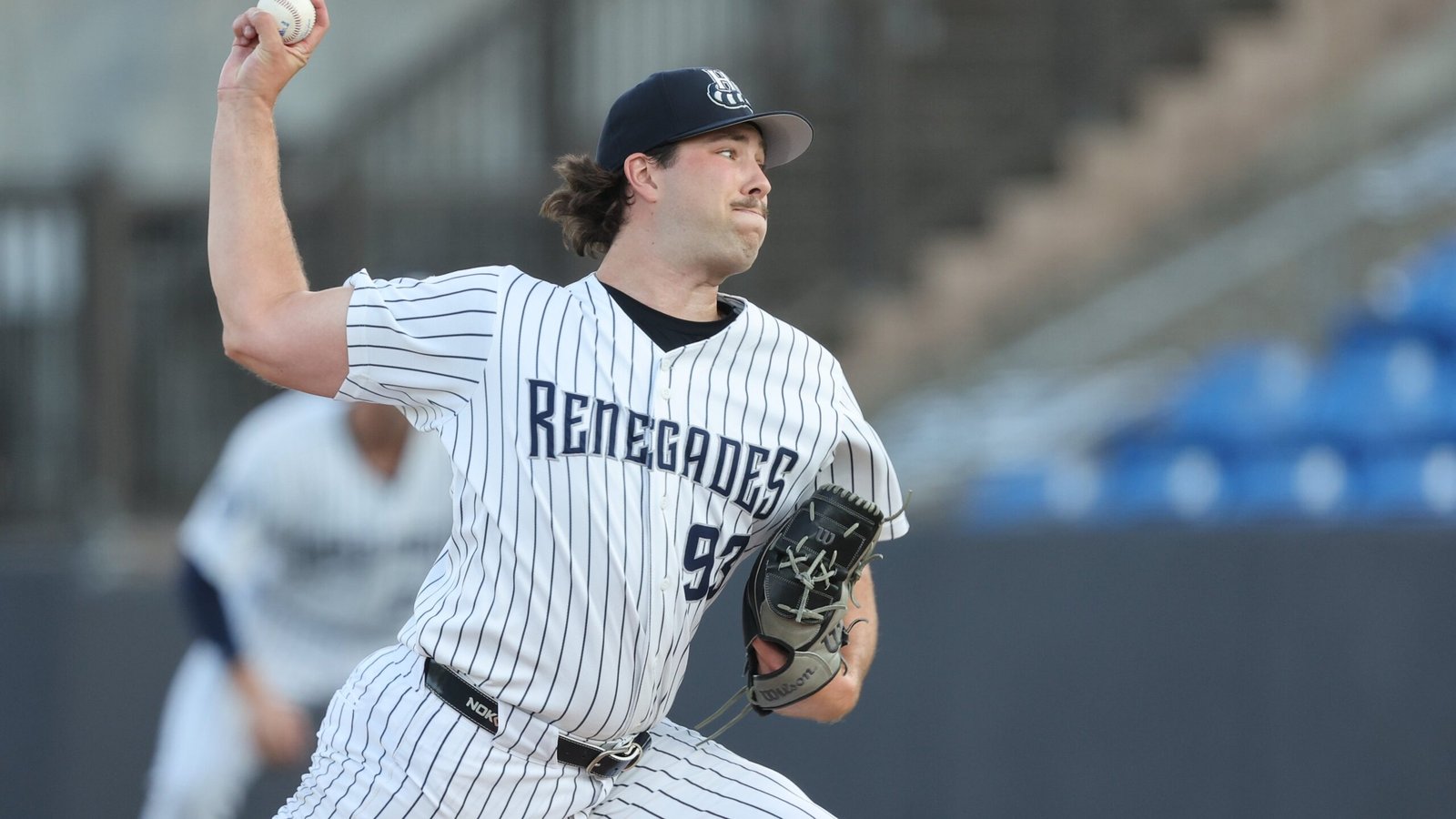
On the American side, 2024 draftee Bryce Cunningham and 2025 pick Mac Heuer are both 6-foot-5 righty throwers. Cunningham should be well known to readers, but to briefly sum up his 2025 debut season, he pitched exclusively with High-A Hudson Valley, throwing a 2.82 ERA (12 G, 11 S), with a 9.11 K/9 and 3.15 BB/9. Cunningham should start the season Double-A Somerset.
Heuer was the 8th round pick last year, and has yet to make a pro debut. With Texas Tech in 2025, he held a 6.28 ERA as a starter (14 G, 14 S) along with an 8.16 K/9 and a 3.91 BB/9. On a related note, fellow Red Raiders Jack Cebert and Tyler Boudreau were signed by the Yankees last year as UDFAs.
6-foot-8 lefty starter Bryce Warrecker is likely the tallest prospect in the system, but he also put up exceptional stats last season: 2.05 ERA in 57 IP, 9.63 K/9 and 2.05 BB/9.
Still, the names to watch are the four tall Dominican pitchers. Marte is the most intriguing of the four, while many wait with bated breath to see how Alejandro fares this year in his first year throwing in the U.S., and how Lalane handles higher levels.
Comments are closed