

As of today, the New York Yankees sit at 86–67, firmly in second place in the AL East but trailing the first-place Toronto Blue Jays by three games. With under two weeks left, overtaking Toronto (89–64) appears out of reach, especially since the Blue Jays hold head-to-head tiebreakers over New York and Boston. Instead, the Yankees are overwhelmingly likely to land the #4 seed as the American League’s top Wild Card. FanGraphs gives New York a 99.4% chance to make the postseason, essentially locking in a Wild Card spot. They lead the Wild Card race by 3 games over the Boston Red Sox (83–70), so barring a late collapse, Yankee Stadium will host the AL Wild Card Series starting Tuesday September 30.
That scenario, a best-of-three Wild Card Series (at home), is the product of statistical odds and standings. The Yankees’ postseason probability is sky-high, but their division title odds are near zero. In plain terms, the numbers project New York to play in the AL Wild Card Series. If the season ended today, they would indeed be the 4th seed, hosting the 5th-seed Houston Astros in a three-game set. The current AL playoff bracket reflects this likely matchup. The postseason gauntlet is a familiar script for the Yankees, who reached the World Series last year (2024) before falling to Los Angeles but must now take the longer road through the Wild Card round.
Lining Up the Wild Card Rotation: Fried, Rodón, and a Decision for Game 3
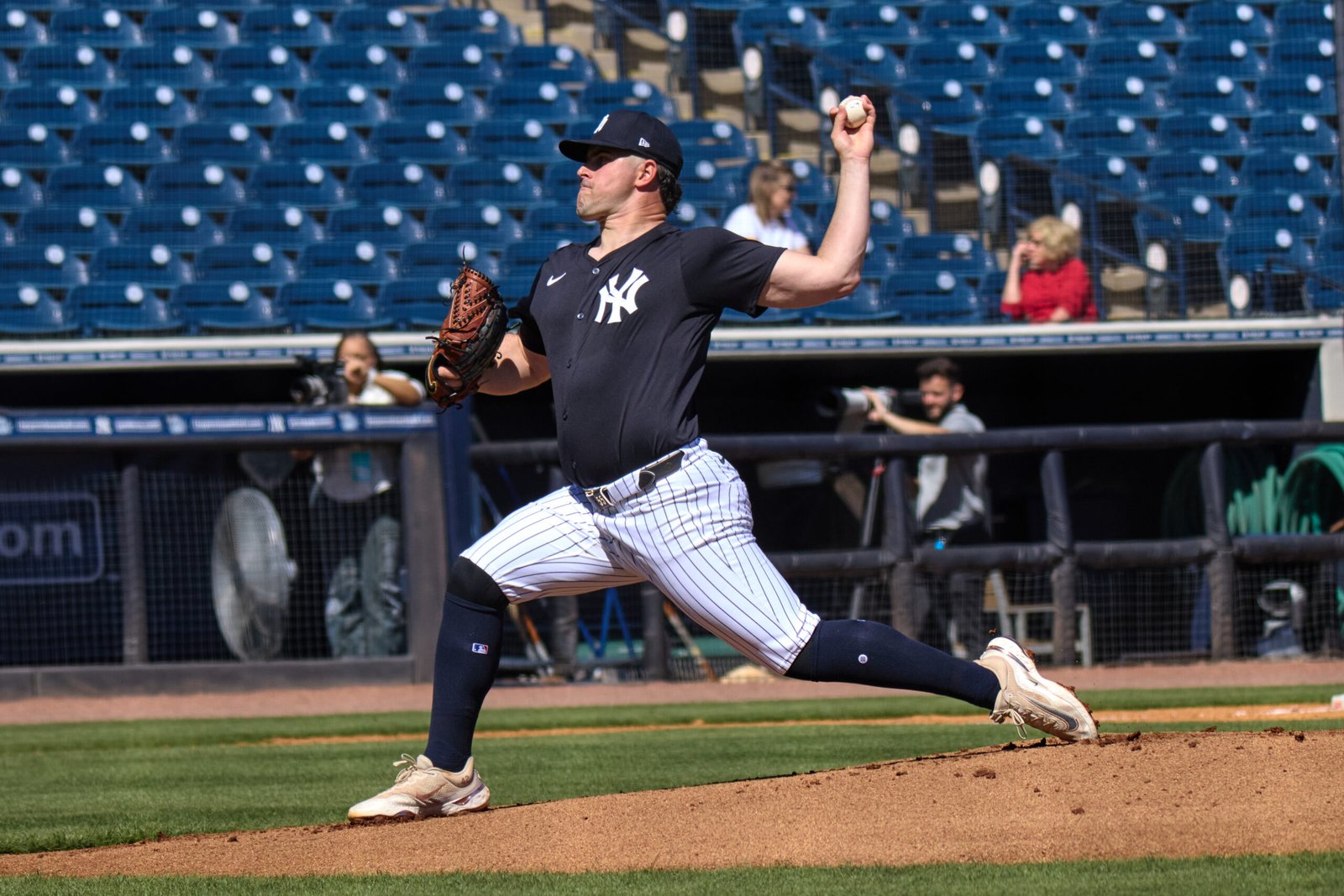
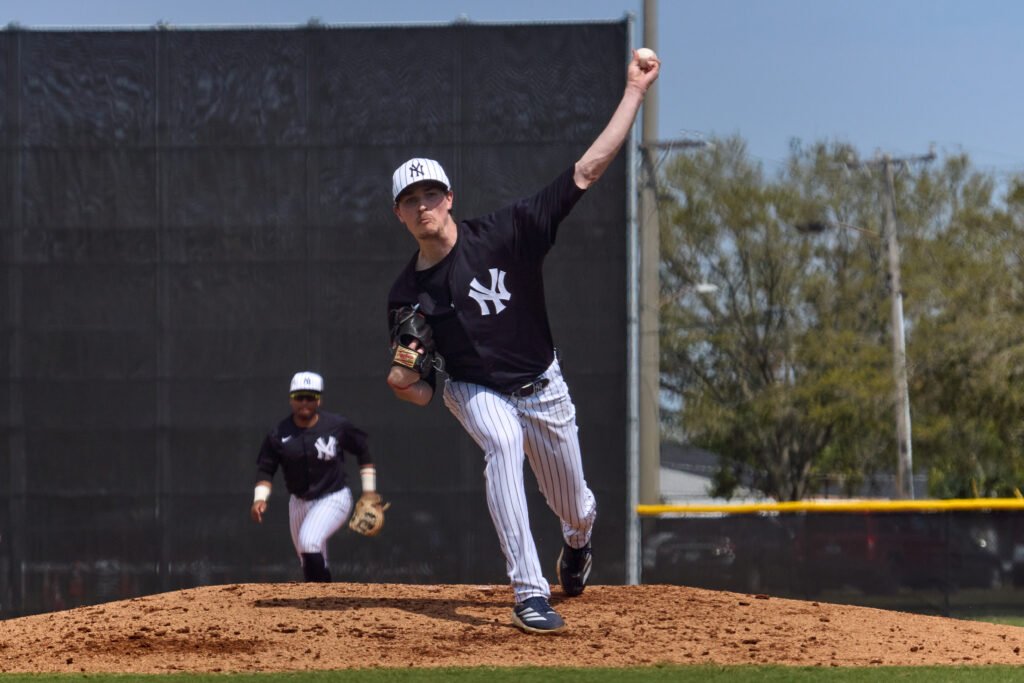
Being the top Wild Card comes with the benefit of home field advantage in the Wild Card Series, but it also means no bye and that the Yankees will need to win a best-of-three to advance. Manager Aaron Boone’s rotation plans point to two veteran left-handers fronting the series and a pivotal decision for a potential Game 3. Offseason free agent acquisition Max Fried (15-9, 2.94 ERA in 2025) and fellow southpaw Carlos Rodón will be the Game 1 and Game 2 starters, respectively, in the Wild Card Series. Fried and Rodón are the only Yankees pitchers besides rookie Will Warren to make 30+ starts this year, and both have been excellent down the stretch. Fried in particular brings an ace pedigree and postseason experience from his Atlanta days, making him a natural choice for Game 1. Rodón, another power lefty, has righted the ship after an injury-marred 2024 and gives the Yankees a formidable one-two punch to open the series.
The Game 3 starter (if needed) is where things get interesting. With 2024 Cy Young winner Gerrit Cole lost for the season, the Yankees have relied on younger arms to fill out the rotation. The decision for a potential elimination game comes down to three right-handers: Luis Gil, Will Warren, or Cam Schlittler. All three have made their case in different ways, but recent trends and matchup considerations point to Luis Gil as the favorite to take the ball in a winner-take-all Wild Card Game 3, should the series go the distance. Yankees insiders have hinted as much. After a recent loss at Boston, it was noted that Warren’s struggles against the Red Sox “will certainly be a factor if the Yankees face the Red Sox, with Luis Gil and Cam Schlittler also vying for starts”. In other words, Gil has pitched himself into serious consideration as the #3 postseason starter. Before diving into why Gil is emerging as the preferred option, let’s briefly profile each candidate:
Luis Gil (RHP, 27 years old): 2024 AL Rookie of the Year who missed the first half of 2025 with a lat strain. Since returning in August, he’s gone 4–1 with a 3.33 ERA in 9 starts. Gil is a power pitcher known for a high-90s fastball and biting slider, though his command can be erratic.
Will Warren (RHP, 26 years old): A rookie who surprisingly opened the year in the rotation and made 31 starts (8–7, 4.44 ERA). He’s a sinker/slider pitcher with a five-pitch mix, and he kept the Yankees afloat all year. However, Warren has shown pronounced platoon splits and some trouble with specific opponents (more on that below).
Cam Schlittler (RHP, 24 years old): A mid-season call-up and one of the Yankees’ top prospects (the 48th-ranked prospect in MLB coming into 2025). Schlittler dazzled early, going 3–3 with a 3.41 ERA and 69 K in 60⅔ IP to date. A towering 6’6” hurler, he lights up the radar gun (average 97–98 mph, max 100.6 mph) and has impressed with a power fastball/curveball combination.
All three have shown they can pitch in the majors, but October baseball is about matchups and trust. Let’s analyze Gil’s performance, especially against likely playoff opponents, and compare it to what Warren and Schlittler bring to the table.
Luis Gil: Clutch Results and Key Matchups
Luis Gil’s 2025 season has been a tale of results vs. peripherals, but there’s no denying he has delivered much-needed quality innings down the stretch. After debuting August 3, Gil shook off a rusty first outing (5 runs in Miami) and has since provided a stabilizing presence. In his seven starts after that debut, he went 3–0 with a 2.25 ERA, pitching at least five innings in each outing. This from a pitcher who was expected to be a “key cog” in the rotation before his spring injury, especially with Cole and Clarke Schmidt out for the year. Gil’s presence helped solidify a rotation that at times featured two rookies (Warren and Schlittler) while becoming the more experienced arm bridging the gap between the veterans and the kids.
Dig deeper, though, and some red flags appear in Gil’s underlying metrics. His control has been problematic. Among pitchers with at least 7 starts, only Lance McCullers Jr. has a higher walk rate than Gil’s 5.9 BB/9. Indeed, Gil walked 23 batters in 35⅓ innings through early September, an issue he also had in 2024 (he led MLB with 77 walks last year). Unlike many pitchers, Gil has shown he can survive the free passes; in 2024 he still posted a 3.50 ERA and 15 wins despite all those walks. But in 2025, his strikeout rate has dipped, meaning fewer escape routes when he does put men on. Last year Gil induced whiffs on 29% of swings and struck out 26.8% of batters; this year those numbers are down to a 23% whiff rate and 19.5% strikeout rate, both below league average. A pitcher who walks nearly 6 per nine and fans less than 20% is usually a recipe for trouble, and Gil’s ERA (3.33) stands in stark opposition to his 4.88 xERA. In short, he’s outperformed his peripherals by a wide margin.
How has he done it?
Gil has shown a knack for limiting hard contact and pitching out of jams. He’s yielding fewer hard-hit balls than last season, only 35.6% of balls in play off him have been hit 95+ mph, down from 37.4% in 2024. That seemingly small improvement takes him from roughly average hard-hit rates to an elite level (for reference, league-average Hard Hit% is around 40%). Hitters are making more contact, but much of it is weak or off the barrel. Additionally, Gil has exhibited some “clutch” ability. Statcast’s Run Value metric (which sums the impact of every pitch) has him at a modest –2 runs overall (slightly better than average) – yet in high-leverage situations, his run value swings to +3. That somewhat paradoxical stat implies that while Gil’s overall pitching has been just a bit above average, he’s been far better at preventing runs in crucial moments (stranding inherited runners, bearing down with men on base, etc.). Whether you attribute that to fortitude or fortune, it’s been a real factor in his success. As one analyst put it, “Walks plus contact equals runs, plain and simple – unless you can find another gear in the key spots”. So far, Gil has found that gear. From a pitch arsenal standpoint, Gil is a different look than either Warren or Schlittler. He’s essentially a three-pitch pitcher: a four-seam fastball averaging 95–96 mph, a sharp mid- 80s slider, and a hard 91 mph changeup. Interestingly, since returning from injury, Gil has leaned less on his heater and more on his off-speed stuff. In fact, only about 49% of his pitches this year have been four-seam fastballs, a stark contrast to the typical fastball-heavy approach of many power pitchers. He’s relied heavily on the slider and that power change, which has helped against opposite-handed hitters. This approach may partially explain the drop in strikeouts, his four-seam lost a tick of velocity from last year (95.6 mph vs. 96.6) and has been hittable when in the zone (opponents batted .279 and slugged .426 off the fastball). But by using it more sparingly and spotting it up, while using the slider to miss bats, Gil has found a formula that works. His slider remains a swing-and-miss weapon, and his changeup (though thrown nearly as hard as some pitchers’ fastballs) has armside run that can neutralize left-handed hitters. In essence, Gil pitches backward at times, showing hitters fewer fastballs than they expect and inducing weak contact with movement. It’s not always pretty, there are walks and only modest strikeout totals, but it has been effective.
Crucially, Gil has already faced a few of the lineups the Yankees are likely to encounter in October, with encouraging results:
vs. Houston Astros (Aug 9 at Yankee Stadium): Gil delivered a strong start against the defending champs, striking out 7 Astros over 5⅓ innings. He allowed 2 earned runs on 6 hits and walked just 1. Houston’s lineup is known for its patience and contact ability, but Gil’s slider baffled them that day. He generated swings-and-misses and escaped trouble when needed. In fact, the video highlight reel from that game shows multiple Astros flailing over Gil’s breaking ball in two-strike counts. The performance was a proof of concept: Gil’s stuff can tame an elite offense.
vs. Boston Red Sox (Aug 21 at Yankee Stadium): Facing New York’s historical archrival and very-possible Wild Card opponent, Gil had a more gritty outing. In 5.0 innings, he gave up just 1 earned run on 4 hits, but it was a high-wire act. He walked five Red Sox batters, repeatedly putting himself in jams. Boston’s lineup, one of the most patient and contact-oriented in the league, forced Gil to work. They consistently battled into deep counts and laid off his slider out of the zone. Yet, Gil did not break. He stranded runners in scoring position and exited after five frames with the Yankees down just 2–1 (he took a no-decision in an eventual loss). The takeaway from that game: Boston can exploit Gil’s wildness, but they still struggled to square him up. Five free passes is flirting with disaster, but the Red Sox managed only 1 run off him, a testament to Gil’s ability to induce weak contact and get a timely strikeout when necessary. It’s a double-edged sword, such a line could just as easily have been 4+ runs if a few balls found gaps. But the fact that Gil survived demonstrated a kind of toughness you need in October.
vs. Seattle Mariners: Gil did not face Seattle in the regular season, his turn never aligned with the Yankees’ games against the M’s due to injury, however, Seattle looms as another possible Wild Card team. We can still consider how Gil’s profile matches up. The 2025 Mariners feature a feast-or-famine offense: plenty of power (Jarred Kelenic, Julio Rodríguez, Cal Raleigh) but also plenty of strikeouts. A pitcher like Gil, who sometimes struggles with walks but has swing-and-miss secondary pitches, could actually fare well against Seattle. Mariners hitters tend to chase, Seattle had one of the higher chase rates and strikeout rates in the league, which plays into the strengths of Gil’s slider/change combo. Meanwhile, the Mariners can punish mistakes if a pitcher grooves a fastball. This is where Gil’s willingness to go off-speed in fastball counts could pay dividends. By comparison, a more fastball-reliant arm might be at greater risk of getting taken deep by Seattle’s power bats. We can also look at how the others did: Will Warren faced Seattle once (July 8) and threw 5⅔ scoreless innings with 4 K, using a steady diet of sinkers and sliders to keep them off balance. Schlittler saw the M’s on July 9 in his MLB debut and went 5⅓ innings, 3 ER, 7 K, allowing a couple of homers but ultimately earning a win. These show Seattle is beatable, but also that they can hit mistakes out. Gil’s ability to miss bats could be the deciding factor in a matchup with the Mariners’ free-swingers. In sum, Gil has shown he can handle big moments against strong teams, albeit sometimes in an unorthodox way. His propensity for walks is an obvious concern, a tight playoff game can turn on a single walk followed by a big hit. But his supporters in the organization note that Gil “demonstrated he can sustain an unorthodox level of success while permitting what for most would be an untenable number of free passes”. The pressure of October may actually sharpen his focus; we saw hints of that clutch factor during the season. There’s also the matter of experience: Gil isn’t a wide-eyed rookie. He pitched, and won, in the 2021 Wild Card Game as a 23-year-old, and he was part of the Yankees’ postseason run last year (he even made the lone winning start in the 2024 World Series). In a staff full of youth, that counts for something. Gil carries himself with a bit of swagger on the mound and doesn’t panic when traffic is on the bases. Surviving bases-loaded jams against Boston or pumping a 97-mph heater by Yordan Álvarez in a key moment (as he did in the Houston start) builds a certain aura. In October, mentality can be as important as stuff. This is not to say Warren or Schlittler lack poise; in fact, Schlittler in his near-perfecto at Steinbrenner Field looked as cool as a seasoned vet. But Gil has been there before. The Yankees know the spotlight won’t rattle him.
The Alternatives: Warren and Schlittler in Perspective
Why, then, not go with one of the other young arms? Will Warren and Cam Schlittler have each impressed in their own right, but there are compelling reasons the Yankees seem to be leaning toward Gil in the rotation while using the others in a bullpen capacity.
Will Warren was arguably the Yankees’ rookie workhorse, surprising many by making 31 starts and throwing over 150 innings. On the surface, he was solid for a back-end starter: an 8–7 record, 4.44 ERA, 160 strikeouts, 1.38 WHIP. Warren’s arsenal is broad, as he features a 93–94 mph four-seam fastball, a sinking two-seamer, a slider, plus a curve (~80 mph) and change (~87) that he’ll mix in. That five-pitch mix and his ability to keep the ball on the ground (thanks to the sinker) helped him navigate a full MLB season. He “kept the team in games,” as Boone often said, which is about all you can ask of a rookie thrust into action. In fact, Warren was one of only three Yankees pitchers (with Fried and Rodón) to log 30+ starts in 2025, a huge testament to his durability and consistency.
However, certain splits and matchups cast Warren in a less favorable light for postseason starts. Most glaring is his record against the Red Sox, the very team New York is likely to see in the Wild Card round. In three starts versus Boston, Warren was knocked around to the tune of a 9.42 ERA (15 earned runs in 14⅓ IP). This includes a six-run drubbing in the first inning at Fenway on Sept. 14 that highlighted Boston’s comfort against him. The Red Sox’s patient, contact-heavy approach seems to give Warren fits. They’ve consistently jumped on his sinkers early in counts and laid off his breaking stuff. As Bryan Hoch noted, those poor results “will certainly be a factor” in deciding postseason roles. If the Yankees draw Boston in the Wild Card, starting Warren would be rolling the dice against a team that clearly has his number.
Even beyond Boston, Warren has vulnerabilities that could be problematic in playoff matchups. He shows a significant platoon split: left-handed hitters slashed .291/.354/.447 off him (about a .800 OPS), compared to just .228/.283/.371 by righties. His ERA against lefty batters was roughly 5.8, versus 3.3 against righties. This split isn’t shocking given his pitch mix. Warren’s primary out-pitch is a slider that breaks away from righties (but into the barrel of lefties), and his sinker runs in on righties (away from lefties, but often over the plate). Teams loaded with left-handed thumpers could exploit this. In a short series, one bad matchup can be fatal.
Warren’s track record versus other contenders was a mixed bag. He actually fared well in his lone outings against Houston and Seattle: on Sept. 3 he held the Astros to 2 runs over 5 innings in Houston, and back in July he blanked the Mariners for 5⅔ innings at home. Those suggest Warren can rise to the occasion. But then there’s Toronto, the most likely ALDS opponent, who shelled him. In a July 2 start at Rogers Centre, the Blue Jays tagged Warren for 8 runs on 10 hits in just 4 innings. He couldn’t keep the ball in the park (2 homers allowed) and issued 4 walks as Toronto’s hitters sat on his stuff. That game was arguably Warren’s worst of the year (Game Score of 10!). It’s only one start, but it underscores the risk: an aggressive, power-laden lineup like Toronto’s can punish Warren if his sinkers don’t sink or his sliders back up.
The upshot is that Warren might be more valuable as a flexible bullpen arm in the postseason. His durability and starter’s repertoire make him an ideal long reliever or piggyback option. For instance, if Gil goes only 4–5 innings in a Wild Card game, Warren could come in to bridge to the late innings, especially if the opponent’s lineup has a string of righties due up (his .213 opponent average vs. RHB is excellent). Warren’s experience pitching both home and away, day and night, also gives the Yankees confidence he can handle a swingman role. The team has not ruled out him starting if a series extends (he could be a Game 4 ALCS starter if needed), but for the Wild Card and possibly ALDS, the safer play is to unleash him strategically rather than expose him at the outset.
Cam Schlittler, on the other hand, presents the tantalizing upside of youth, a potential future ace who is almost ready for prime time. What he’s done in a short period is extremely impressive. Schlittler became the first Yankee since Masahiro Tanaka (2014) to allow three or fewer runs in each of his first 8 career starts. Through those 8 starts, he was 2–2 with a 2.76 ERA, having struck out 8+ batters on multiple occasions. His 6.2-inning, one-hit gem at Tampa Bay on August 20 was a revelation, as he carried a perfect game into the 7th and fanned 8 Rays, completely dominating with upper-90s heat. Schlittler followed that by blanking the Nationals for 6 innings in his next outing. At that point, he appeared to be cruising toward a postseason rotation spot himself.
Notably, a tweak in Schlittler’s pitch usage fueled his late-August surge. Early on, he was leaning heavily on his four-seam fastball (which sits 97–98 mph) and a hard cutter/slider, with only occasional use of a curveball. But against the Rays and Nats, he increased his curveball usage to ~19%, a season high, and it paid off. By flipping in more curveballs (a true downer in the mid-80s) to complement his high-riding fastball, Schlittler kept hitters off balance. Against Tampa Bay, he was masterful: 19 swinging strikes in that game, including 11 whiffs just on his heater by elevating it above the zone. His strategy was classic power pitching (high fastballs and low curveballs) when executed with his stuff, it’s practically unhittable. Yankees analysts noted how well this combo played: the fastball in the 95th percentile of velocity paired with an emerging curve that he can land or bury. Hitters have to respect the heat, and the slow hook then drops in for strikes or weak contact. In Washington, Schlittler continued this approach and also mixed in more of his cutter. The cutter (which he grips like a slider) sits in the low-90s and gives him a weapon moving horizontally. The organization loves how quickly he’s developed the cutter, it’s become a significant part of his mix. All told, Schlittler features a four-seam fastball, cutter, curveball, and occasionally a sinker, but the fastball-curve one-two punch has been his ticket to success of late.
If stuff and momentum were the only factors, Schlittler might well get the nod. However, a couple of considerations temper that. First, he’s still a rookie with only ~60 innings under his belt. The Yankees have historically been cautious with such youth in October, preferring to put them in the bullpen to “air it out” for shorter stints. Second, Schlittler finally showed some vulnerability in September. On Sept. 5, in a preview of a possible ALDS matchup, the Blue Jays knocked him out after just 1.2 innings, tagging him for 4 runs and 5 hits. It was the first real dud of Schlittler’s career. He wasn’t hit for power (no homers), but Toronto came out aggressive and ambushed his fastballs early in counts. Perhaps the Jays noted the Rays/Nats game plan and decided to attack the heater before he could get to the curveball. Schlittler also issued 2 walks in those 1.2 innings, suggesting some command issues. One rough outing isn’t a condemnation, but it did illustrate the risk of relying on a rookie starter against a potent, veteran lineup. He did bounce back on Sept. 11 with a strong 6-inning, 1-run win over Detroit, and on Sept. 16 he battled through 4.2 innings against Minnesota despite 5 walks (the Yankees won 10-9). But the Blue Jays game planted a seed of doubt: what happens when a team gets a second look at Schlittler? Toronto saw him previously in July and he beat them (5 IP, 2 ER in his second MLB start). The second time around, they clearly adjusted. A playoff series often hinges on adjustments, and young pitchers can be vulnerable once opposing hitters have some video and at-bats against them.
There’s also the consideration of Schlittler’s role beyond the Wild Card round. If the Yankees advance, they would face the Blue Jays in the ALDS. It’s a five-game series where a fourth starter might not even be used (teams often go with three starters if scheduling permits). New York’s ALDS rotation likely lines up as Fried, Rodón, and whoever earned the Wild Card Game 3 start. The other two of Warren/Schlittler/Gil would be in the bullpen. If Gil is that #3, the Yankees seem perfectly content (and even enthused) to have Schlittler continue as a multi-inning relief weapon for the early rounds. Imagine a scenario where Fried or Rodón goes 5 innings and hands it to Schlittler, the rookie could be electric airing it out for 2 innings in relief, with that 98 mph fastball playing up even more in short stints. In fact, using Schlittler out of the bullpen in the ALDS might be the best of both worlds: he’s available to impact multiple games, not just one start. His presence would give Toronto a very different look mid-game, and his 95th-percentile velocity and high-spin curve could be devastating in bursts. Warren, similarly, can be a bullpen asset, especially against lineups stacked with righties or as a groundball specialist to escape a jam. The Yankees’ bullpen depth is a real concern right now, and converting two capable starters into relievers for the postseason helps address that.
Bottom Line
By keeping Warren and Schlittler in relief for the Wild Card and ALDS, the Yankees effectively weaponize their depth. Imagine a scenario in the ALDS where Fried exits after 6 innings with a slim lead, Boone could turn to Schlittler for the 7th and/or 8th to blow hitters away one time through the order, then hand off to David Bednar for the 9th. Or, if Rodón has a short outing, Warren could piggyback and give multiple innings, saving the rest of the bullpen. Both youngsters have shown they can dominate in spurts: Warren struck out 7 over 6⅔ in a brilliant August 11 start, and Schlittler, as noted, had outings of 8 K and 8 K with swing-and-miss galore. There’s a strategic element here, in a five-game series, deploying 1–2 of these guys in relief might impact more total innings than using them each as a one-off starter. Gil, by contrast, doesn’t profile as well as a reliever (he walks too many to drop into the fire with men on base). His value is higher as a starter who can go through a lineup two times. Warren and Schlittler can be directed to empty the tank for 40–50 pitches out of the ‘pen if needed, a role in which their stuff might even tick up.
The Yankees’ analytical department and coaching staff have surely pored over the data, the game logs, and the scouting reports. All signs point to a sensible alignment: Fried-Rodón-Gil in the rotation, with Warren and Schlittler out of the bullpen to start the playoffs. If New York advances deeper, this could always be reevaluated. A potential ALCS or World Series might necessitate using four starters, at which point Schlittler could get a start. But that’s a bridge to cross later. Right now, the focus is on winning the Wild Card Series and preparing for Toronto.
No responses yet