
Why the Yankees Are Building a Hard-Throwing Bullpen
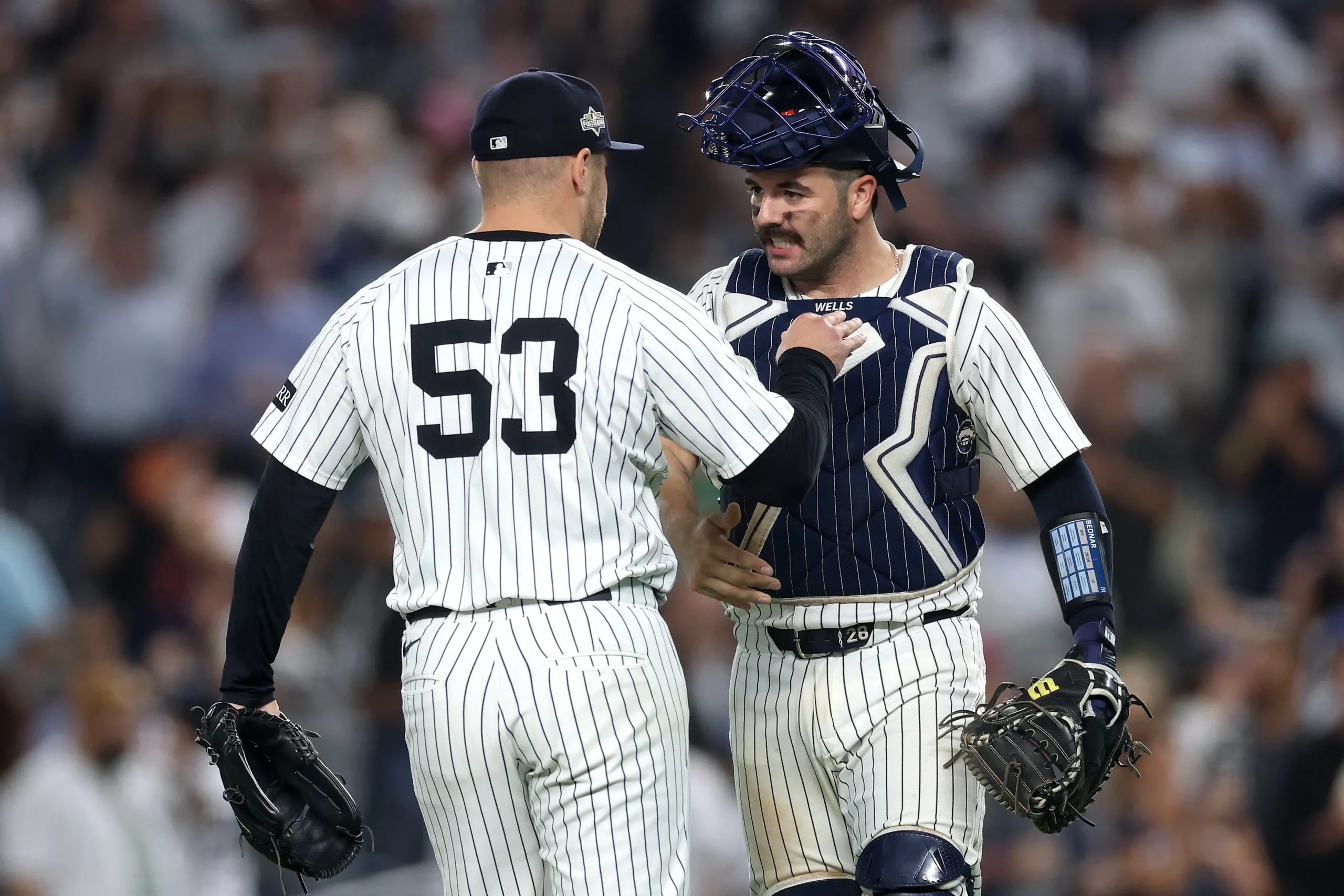
The New York Yankees have made a clear statement about their bullpen philosophy with a series of recent moves. In the past year, they aggressively acquired high-octane relievers most notably, Camilo Doval, Fernando Cruz, and David Bednar in trades. Each of these pitchers brings top-tier velocity or swing-and-miss stuff (or both), reflecting a deliberate plan to build a bullpen that overpowers hitters. This strategy aligns with broader MLB trends in the Statcast era, where velocity and strikeouts have become king. Below, we break down why the Yankees are stockpiling hard throwers and how it fits into modern baseball’s bullpen blueprint.
Power Arms Arrive in the Bronx: A Bullpen Philosophy on Display
By adding the likes of Doval and Bednar the Yankees added to their bullpen at the MLB Trade Deadline to address a glaring weakness in the first half of the season. These moves were not random talent grabs, but targeted acquisitions of pitchers known for velocity and strikeouts. David Bednar, an All-Star closer in 2022 and 2023, brings a fastball that averages around 97 mph and a power curve, after joining New York he struck out 36% of batters faced and quickly took over ninth-inning duties from the struggling Devin Williams and Luke Weaver. Camilo Doval offers perhaps the most electric raw stuff: he boasts a cutter that sits 98–100 mph and can reach triple-digits (he even hit 102.2 mph in one outing). Doval emerged as a top closer in 2022–23, and though control issues led to a spike in ERA in 2024, the Yankees clearly coveted his high-octane arsenal and swing-and-miss potential.
Even lower profile additions fit the mold. Fernando Cruz, a splitter specialist picked up from Cincinnati, quietly led the Yankees’ bullpen in strikeout rate (an astounding 41.2% K-rate in mid-2025 before an injury). With a fastball in the mid-90s and a diving splitter, Cruz struck out over a third of the hitters he faced in 2025, a huge step up from his time with the Reds. And Jake Bird, acquired from Colorado, adds depth as a right-hander with a mid-90s sinker and a nasty slider/cutter combination that has shown flashes of being “incredibly difficult to hit” when he’s at his best. Bird doesn’t have the All-Star resume of the others, but even he posted a career-best 26.3% strikeout rate for the Rockies last season, further evidence that New York is focusing on Ks in bulk.
The Statcast Era Velocity Boom – and Why New York Wants In
Zooming out, the Yankees’ hard-throwing bullpen philosophy mirrors a league-wide trend: Major League Baseball is throwing harder than ever. In the Statcast era (2015 to present), average velocities have risen steadily each year. In fact, 2023–24 saw the average four-seam fastball up to about 94.2 mph, a jump from roughly 91 mph in 2008. Triple-digit fastballs, once a rarity, are now almost routine, pitchers unleashed nearly 3,900 pitches at 100+ mph in 2022, compared to just 214 such pitches back in 2008. As Dodgers manager Dave Roberts noted, “I didn’t see 100 mph when I was playing. It’s commonplace now”.
This league-wide velocity boom is fueled by advanced training, technology, and an arms race for the most overpowering stuff. Hitters are facing more high-90s heat than ever, and that has coincided with offense being suppressed as league batting averages in recent years have hovered around half-century lows. The message to teams is clear: power pitching works. Yankees GM Brian Cashman and his analytics team are well aware of these trends. By stockpiling pitchers who throw in the upper 90s, the Yankees are essentially aligning themselves with what works in today’s game. It’s an organizational acknowledgment that missing bats with velocity and movement is one of the surest paths to run prevention in the modern era. As superstar Manny Machado put it, “There’s more spin rate. There’s harder throwers… and that’s what makes hitting a little bit harder” for today’s batters. In other words, if you can’t beat the velocity boom, join it. The Yankees are emphatically joining it.
Swing-and-Miss Bullpen: The New Playoff Blueprint
Building a swing-and-miss bullpen isn’t just a regular-season ploy, it’s a blueprint drawn from recent postseason success stories. Come October, high-leverage situations often call for relievers who can get outs with minimal contact. Strikeouts are the most reliable way to escape jams; a hitter who doesn’t put the ball in play can’t hit a sacrifice fly, move a runner, or reach on a lucky bloop. Thus, many contenders have loaded up on strikeout arms in the bullpen, and the Yankees are following suit.
Think of the 2016 Cleveland Indians deploying Andrew Miller in any inning to mow hitters down, or the 2015 Kansas City Royals shortening games with a trio of power relievers. More recently, the trend has become even more pronounced: it’s “one max-effort reliever after another in postseason baseball” these days. In the 2025 playoffs, for example, the San Diego Padres rode an elite bullpen (best in MLB in ERA) full of flamethrowers, including rookie Mason Miller who hit 104 mph and struck out eight straight in one appearance. Teams with deeper, harder throwing bullpens can aggressively mix and match in the late innings, knowing each new arm can miss bats at an elite rate. As Sports Illustrated noted, a deep, swing-and-miss bullpen “rewards multiple moves” by the manager, it gives flexibility to play matchups without introducing a weak link. By contrast, teams that lack strikeout arms are at a severe disadvantage. (The 2025 Detroit Tigers, for instance, had the lowest bullpen K-rate in MLB and paid the price in an early postseason exit when their contact-prone relievers couldn’t shut opponents down.)
The Yankees clearly want to be in the former camp. By emphasizing high strikeout relievers, New York is aiming to emulate the bullpen model that thrives under playoff pressure. Their newly assembled relief corps is built to maximize whiff rates and Ks: Bednar, Doval, and Cruz all have had strikeout percentages well above the MLB average for relievers. In fact, upon acquiring Bednar (33.1% K rate) mid-2025, the Yankees noted he instantly became one of their top miss-bat guys. No Yankee reliever had a higher strikeout rate last year except the oft-injured Cruz at 41.2%. That stat highlights why the team felt it necessary to bring in outside help. They turned a bullpen weakness into what could be a strength: a stable of arms that can dominate hitters when it counts.
Bringing the Heat: Statcast Metrics of New York’s New Relievers
It’s not just reputation – the numbers back up how hard-throwing and bat-missing this Yankees bullpen can be. Statcast data puts some specifics to the hype. Camilo Doval’s cutter/slider averaged around 98 mph last season, a figure that places him near the very top of the velocity leaderboards for that pitch. On a hot night in Arizona, he even averaged 100.2 mph on his sinker, a glimpse of the triple-digit gear he can reach. That kind of heat coming in late innings is a nightmare for hitters, especially when paired with Doval’s biting slider. David Bednar, meanwhile, brings a four-seam fastball that sat 97.1 mph in 2025. He combines that with a splitter and curveball, but it’s the high-90s heater up in the zone that often sets the tone, allowing him to rack up strikeouts in bunches (again, a 36% K-rate with New York down the stretch).
Fernando Cruz throws in the low-to-mid 90s (92–94 mph on his fastball), but his signature splitter (around 80 mph) is the equalizer, it drops off the table, yielding an extraordinary 19% swinging-strike rate and that team-best 41% strikeout rate in 2025. And Jake Bird typically delivers his sinking fastball at 94–95 mph with heavy run, complemented by an 84 mph slider and a cutter around 94 mph. Statcast pitch movement leaderboards show Bird’s sinker has excellent arm-side run, which, when located well, helps him get both whiffs and grounders. In Colorado, Bird’s stuff translated to roughly a league-average whiff rate, but Yankees scouts saw the ingredients of more, a reason they snagged him as a project who could thrive in a more pitcher-friendly environment and with the Yankees’ coaching tweaks.
In short, every arm in this bullpen has at least one pitch that is a plus weapon, whether via pure velocity or movement (or ideally both). New York now has multiple relievers who can blow a fastball by a hitter or make him chase something with wicked break. The Statcast leaderboard is going to have a lot of pinstripes on it when it comes to reliever velocity and strikeout metrics.
Development, “Gas Station” Labs, and Optimizing for Leverage
As much as acquiring talent is key, the Yankees are also leaning on development and smart usage to maximize this bullpen. It’s no coincidence that Matt Blake, a pitching coach with a background in analytics and pitch design, oversees this staff. Under his guidance, the Yankees have embraced modern pitcher development, building a pitching laboratory known as the “Gas Station” at their Himes Player Development and Scouting Complex in Tampa, FL to help arms refine their velocity, spin, and mechanics. That facility, which opened in 2020, uses high-speed cameras and Doppler radar to analyze grip, spin axis, and every minute detail of a pitch. It’s the kind of place where a guy like Clay Holmes (who blossomed in New York by upping his sinker usage and velocity) turned into an elite reliever, and where these new acquisitions can likewise be optimized. The Yankees send many of their pitchers, from prospects to veterans, through modern programs (akin to Driveline Baseball) to squeeze out extra mph and sharper movement. Doval’s slight dip in fastball effectiveness in 2024, for instance, is likely an early project for Blake and the “Gas Station” team to tackle, ensuring his mechanics and approach get him back to the 100-mph, high-spin form he showed in San Francisco.
Optimizing pitch usage is another hallmark of the Yankees’ pitching philosophy. This means encouraging pitchers to lean into their best pitches in the right moments. We’ve seen New York do this in recent years, when they acquired reliever Clay Holmes, they had him throw his heavy sinker over 80% of the time, and his results improved dramatically. With Cruz, they let him spam that splitter in big spots. With Bird, they may toy with his pitch mix to emphasize the harder cutter/slider to boost strikeouts. Each pitcher will be deployed to maximize their strengths, rather than forced into a one-size plan. All told, the Yankees’ approach to bullpen construction is both modern and aggressive. They’ve zeroed in on pitchers with the raw ingredients, velocity, movement, strikeout ability, that today’s game demands, and they have built an infrastructure to refine those ingredients. It’s a plan designed to shorten games, neutralize the most dangerous hitters, and thrive under postseason pressure. Yankees fans who love data and Statcast will especially appreciate this bullpen, as it’s tailor made for the era of velocity and whiffs. If all goes to plan, come the late innings at Yankee Stadium, the radar gun will be lighting up and opposing batters will be walking back to the dugout shaking their heads. It’s a high risk, high reward formula, but it just might be the key to “locking it down” in October, and that’s exactly what the Yankees are banking on with their new hard throwing bullpen.