
2026 MLB Draft Profile: Ethan Norby – The East Carolina Pirates’ Ace
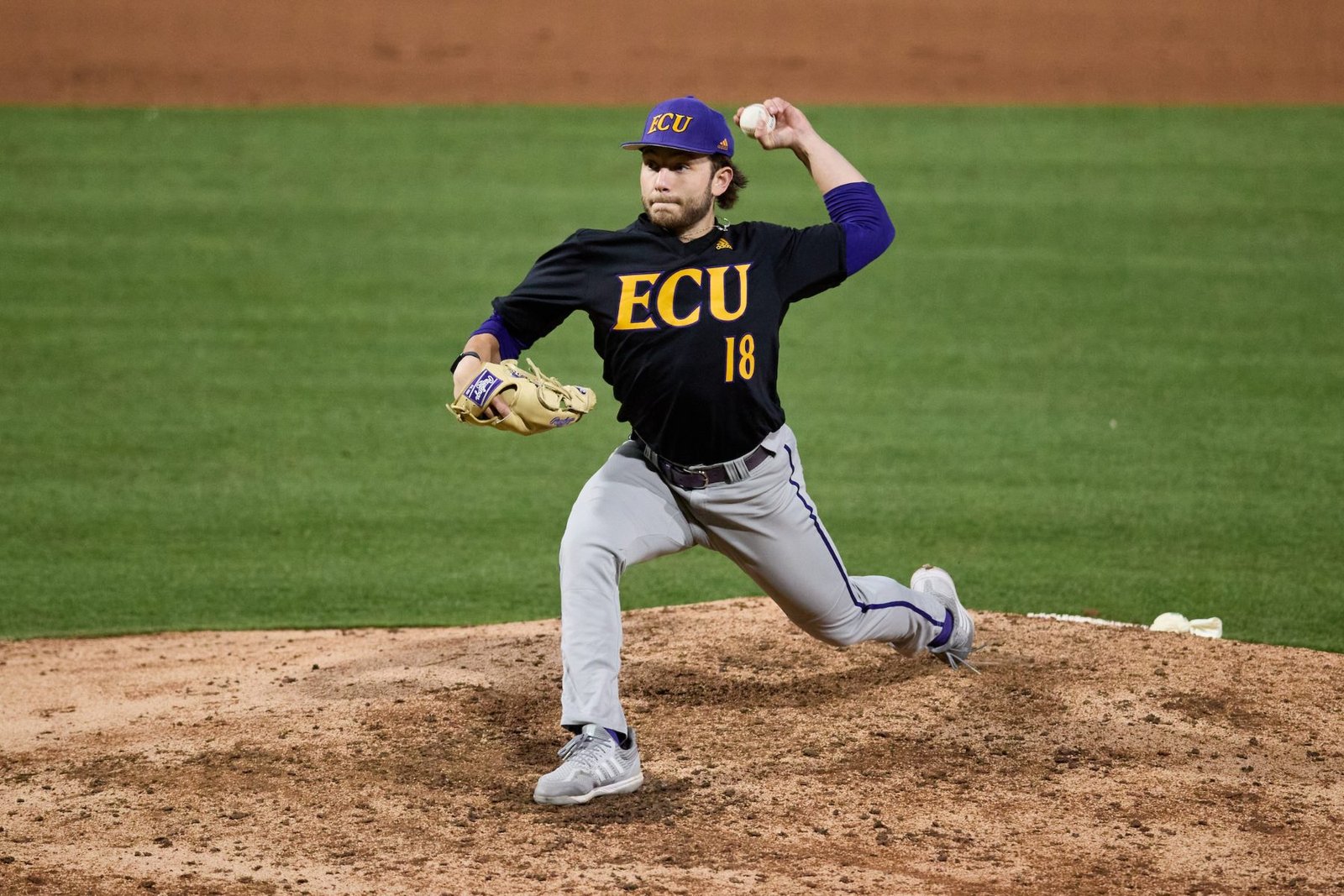
Every MLB draft cycle brings a handful of college arms who quietly check many of the analytical boxes modern front offices prioritize. In the 2026 draft class, East Carolina left-hander Ethan Norby emerged as exactly that type of pitcher.
For an organization like the New York Yankees, which has increasingly targeted pitchers with strong underlying traits such as strikeout ability, deception, pitch shape, and development upside, Norby profiles as an intriguing potential fit.
While he may not yet carry the national name recognition of some first round arms, Norby’s skill set aligns well with the type of pitcher the Yankees’ pitching development group has successfully refined in recent years.
College Performance: Strikeouts and Swing-and-Miss Ability
Norby has developed into one of the more reliable starters in the American Athletic Conference for East Carolina, showing steady growth throughout his collegiate career. The left hander’s statistical profile suggests a pitcher who can miss bats consistently while limiting hard contact, two traits that modern analytical models prioritize heavily.
Key indicators from his recent college seasons include:
- High strikeout rates, often sitting in the double-digit K/9 range
- Strong swing-and-miss ability on both his fastball and breaking ball
- Solid control profile, limiting free passes relative to strikeouts
- Ability to work deep into games
Norby’s strikeout-to-walk ratios have been particularly encouraging. College pitchers who combine bat-missing ability with manageable walk rates frequently translate well into pro ball, especially when they have room for velocity or pitch design gains. For the Yankees, who lean heavily on data-driven pitching development, Norby’s statistical indicators would make him an appealing developmental project.
Pitch Arsenal and Stuff
Norby’s arsenal centers around a four pitch mix that gives him the potential to remain a starter long term.
Fastball – His fastball typically sits in the low to mid 90s with occasional higher readings. What makes the pitch effective is its deceptive release and carry through the zone, allowing it to generate swings and misses above the barrel. The Yankees have targeted pitchers with these types of fastball characteristics before, arms whose raw velocity may not initially jump off the page but whose pitch shape and extension make the pitch play up.
Slider – Norby’s slider is arguably his best swing-and-miss offering. The pitch features late horizontal movement and can generate chases off the plate against both right and left handed hitters.
Changeup – His changeup has developed into a legitimate weapon against right-handed hitters, giving him a pitch capable of inducing weak contact and ground balls.
Cutter – Norby also mixes in a cutter, giving hitters another look and preventing them from sitting on his slider.
The ability to mix four pitches is particularly valuable for a young starter, and it suggests Norby has the pitchability foundation needed to navigate professional lineups multiple times through the order.
Why the Yankees’ Development System Fits
One reason Norby could be a particularly appealing target for the Yankees is how well his profile matches the organization’s pitching development strengths.
Over the past several seasons, the Yankees have shown an ability to help pitchers:
- Increase fastball effectiveness through pitch design
- Refine breaking ball shape using high speed tracking data
- Optimize pitch usage and sequencing
Pitchers entering the system with solid baseline command and multiple usable pitches often see significant improvement once the organization begins refining pitch shapes and usage patterns.
Norby appears to check many of those boxes already. Because he already shows feel for a deep pitch mix, the Yankees could focus on enhancing the quality of his best pitches rather than rebuilding his arsenal from scratch.
The Value of a Left-Handed Starter
Another factor working in Norby’s favor is simple organizational need.
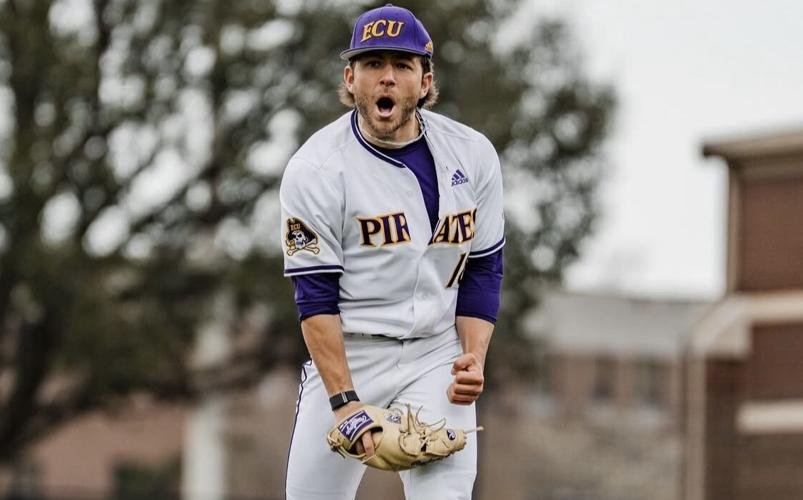
Left-handed starting pitching remains one of the most valuable commodities in baseball. Teams are constantly searching for lefties who can:
- Neutralize left-handed hitters
- Generate swings and misses
- Provide rotation depth
Norby’s ability to miss bats as a left-handed starter could make him particularly attractive in the early to middle rounds of the draft. Even if he ultimately projects as a back end starter or multi-inning weapon, pitchers with that skill set provide significant value over the course of a long season.
Projection: Developmental Upside
Like many college pitchers entering the draft, Norby’s long-term value will depend heavily on how much his stuff develops in pro ball.
Several areas could still improve:
- Velocity gains with professional strength programs
- Sharper breaking ball shape through pitch design technology
- Refinement of pitch sequencing
If those improvements occur, Norby could develop into a legitimate rotation candidate. If not, his pitch mix and swing-and-miss ability still give him a pathway to a high leverage bullpen role.
Either outcome carries real value.
Final Thoughts
The Yankees have increasingly targeted pitchers whose analytical indicators suggest future growth, rather than relying solely on radar-gun readings or draft pedigree. Ethan Norby fits that mold.
He offers:
- A left-handed starter profile
- A deep four pitch arsenal
- Strong strikeout ability
- Developmental upside through pitch design
For an organization that thrives on maximizing pitching potential, Norby represents the type of arm that could quietly outperform his draft slot. If the Yankees are searching for another analytically intriguing pitcher in the upcoming draft, Ethan Norby could be exactly the kind of prospect worth betting on.