
Aaron Boone’s Evolution into the Perfect Modern Manager for the New York Yankees
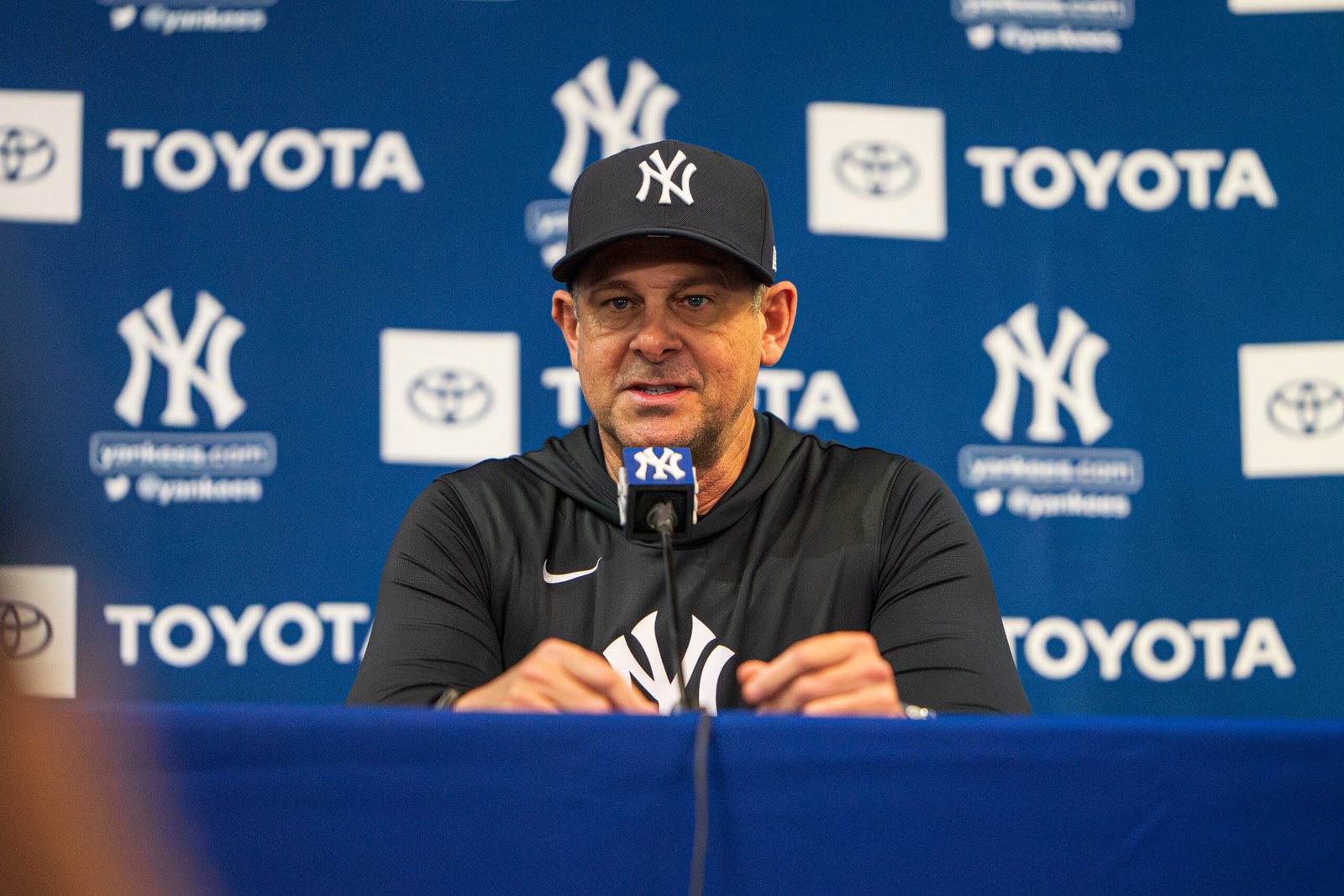
Aaron Boone’s tenure as manager of the New York Yankees has evolved into one of the more fascinating case studies in modern baseball leadership. When Boone was hired in December 2017, he arrived without prior managerial experience, stepping into one of the most pressure filled jobs in professional sports. Nearly a decade later, he has not only stabilized the position but redefined what it means to manage in the modern era, blending analytics, communication, and clubhouse culture into a consistently winning formula.
From a pure results standpoint, Boone’s résumé is already among the most impressive in franchise history. Entering the 2026 season, he has compiled roughly 700+ wins with a winning percentage around .580–.585, placing him among the most successful managers in baseball over that span. His teams have reached the postseason in nearly every year of his tenure, a level of consistency that aligns him with Yankees managerial greats. In fact, Boone ranks among the top seven in franchise history in wins and already sits in elite company alongside names like Joe Torre and Casey Stengel in terms of sustained success over his first several seasons. Early in his career, he even made history by becoming the first manager ever to win 100 games in each of his first two seasons, immediately validating the organization’s bold hire.
But what truly defines Boone’s evolution is not just the wins, it’s how those wins are achieved. He has become the prototype of the modern “players’ manager,” a leader who prioritizes communication, trust, and adaptability. In an era dominated by front-office analytics, Boone has mastered the balance between data-driven decision making and human connection. Players consistently support him publicly and privately, a testament to his ability to maintain clubhouse cohesion in a market where pressure often fractures teams. That stability matters; across his tenure, the Yankees have avoided the internal volatility that derails many contenders, even while dealing with injuries, roster turnover, and championship expectations.
Boone’s adaptability is another defining trait. The Yankees he inherited in 2018 were built around a young core led by Aaron Judge, but the roster has since evolved into a constantly shifting mix of veterans, prospects, and analytically optimized role players. Through it all, Boone has managed to extract consistent production. Whether navigating injury riddled seasons or integrating new acquisitions, his teams rarely collapse. Instead, they win, often 90+ games, and remain competitive deep into October. That level of year-to-year floor is one of the clearest indicators of managerial value in today’s game.
Critics often point to the absence of a World Series title as the missing piece of Boone’s legacy. However, history suggests patience is often required, even for the game’s greatest managers. Dusty Baker did not win his first championship until his 25th season as a manager. Tony La Russa needed years, and multiple stops, before breaking through with the St. Louis Cardinals. Even Dave Roberts, often cited as a modern comparison, had to navigate several postseason disappointments before building a championship résumé. In fact, many elite managers require extended tenures to win their first title, reinforcing the idea that postseason success is often as much about timing and roster construction as it is managerial ability.
Boone’s trajectory fits squarely within that historical pattern. He has already guided the Yankees to an American League pennant and multiple deep postseason runs, positioning the franchise within striking distance of another championship. Importantly, his teams consistently put themselves in position to win it all, a prerequisite that even Hall of Fame managers struggled to achieve early in their careers.
Ultimately, Aaron Boone’s greatness lies in his ability to evolve with the game. He is not a traditional authoritarian figure like managers of past eras, nor is he purely an analytics conduit. Instead, he represents the hybrid model that defines modern baseball leadership: a communicator, a culture builder, and a strategist who understands both the numbers and the people behind them. In the context of today’s game and the unique demands of managing the Yankees, that combination may make him exactly what the organization needs.
Championship or not, Boone has already proven something significant: sustained excellence in the modern MLB environment is incredibly difficult. And year after year, under his leadership, the Yankees remain exactly what they are expected to be, relevant, competitive, and firmly in the hunt.