
With Aaron Judge Out, Here’s What the Statcast Data Says the New York Yankees Are
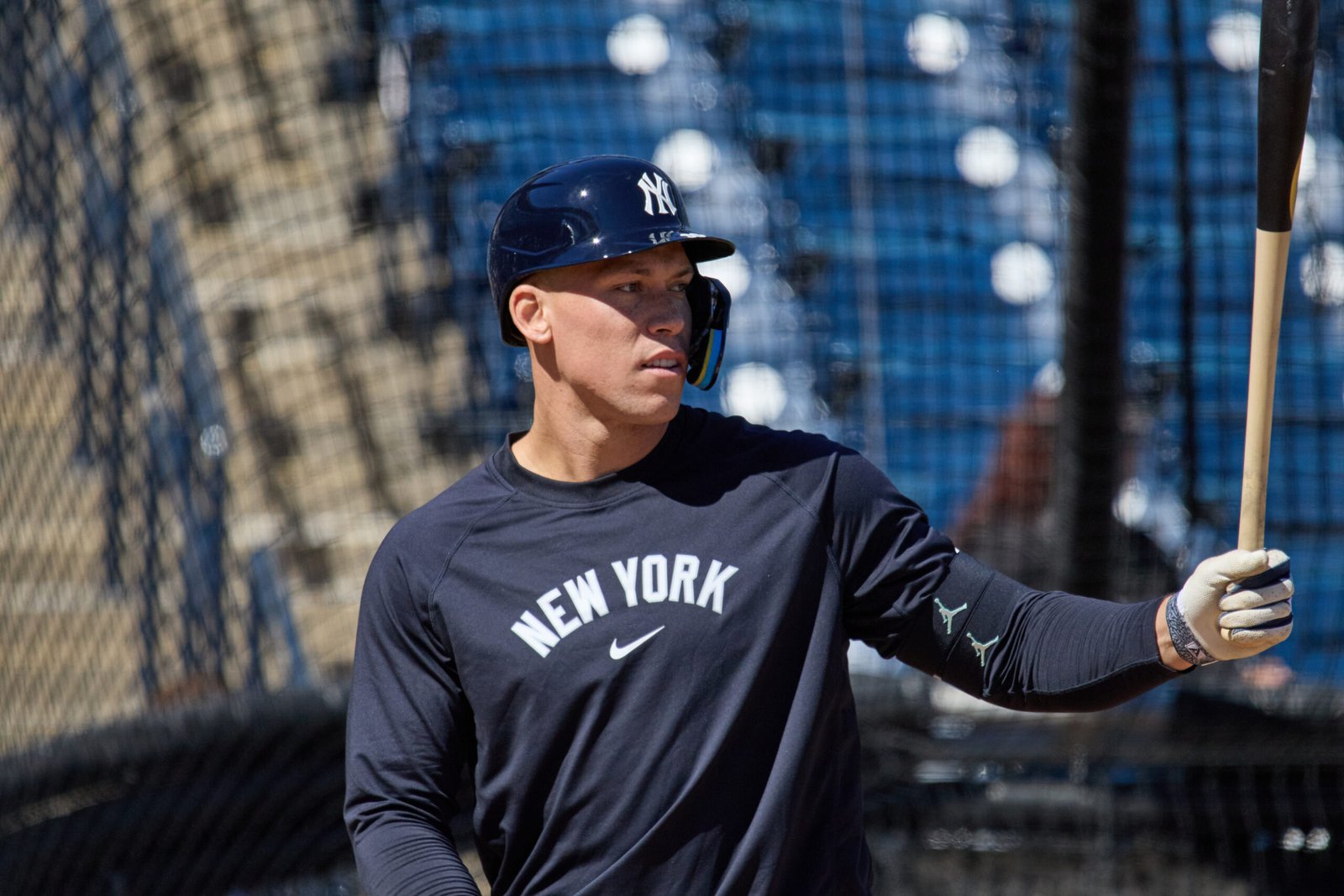
This is the question Yankees fans have been avoiding since Aaron Judge left the lineup with a stress fracture in his right rib. Not “when does he come back?” Not “who do they call up?” The real question: stripped of the best hitter on the planet, who are these Yankees?
The answer, when you look at the underlying Statcast data instead of the win-loss record, is more complicated than either the optimists or the doomsayers want to admit.
The Hole Is Enormous. Let’s Not Pretend Otherwise.
Start with what’s been removed. Through May 31, Judge was hitting .248 with 17 home runs and a .907 OPS. His Statcast profile this season was other-worldly even by his own historic standards: a 94.1 mph average exit velocity, 57.3% hard-hit rate, .388 wOBA, and a .415 xwOBA. That is meaning his expected production was even better than what showed up in the box score.
That is a “generational” offensive force. There is no honest framing of his absence that makes it anything other than catastrophic on paper. The Yankees have gone to more imaging, and the timeline is at minimum two months. That means the heart of the lineup, the player Aaron Boone called the engine of everything the offense does, is watching the trade deadline approach from a training room. So who is actually left?
The Case for Cautious Optimism: Ben Rice Is Real
The most important thing the Statcast data tells us about the Yankees without Judge is that Ben Rice is not a fluke.
Rice has posted a .492 xwOBA in 2026, a number that trails only Yordan Alvarez among qualified MLB hitters. That is not a misprint. Rice’s barrel rate and hard-hit rate back it up. His 2025 campaign (.394 xwOBA in 138 games) was the preview; 2026 has been the full-length feature.
Aaron Boone has said publicly that Rice’s breakout was visible from 2024 Spring Training, and his internal trajectory bore that out. The Yankees effectively have an MVP-caliber hitter at first base, and that matters enormously when Judge’s absence shifts Rice from the No. 2 hole to the de facto anchor of the offense.
The Yankees also have Paul Goldschmidt, whose platoon split remains dangerous. Goldschmidt is posting a .554 xwOBA against left-handed pitching specifically in 2026. Cody Bellinger, Spencer Jones, and Jasson Dominguez round out an outfield that, while thin on star power, provides competent floor production.
On paper, Rice-Goldschmidt-Bellinger is a functional middle of the order. Not a World Series middle of the order. But functional.
The Case for Alarm: The Bottom Third Is a Black Hole
Here is where the Statcast data gets uncomfortable. The Yankees’ 7-8-9 hitters, in recent lineups, some combination of Ryan McMahon, Austin Wells, and Anthony Volpe have posted a collective .297 xwOBA on the season, with a 28.0% strikeout rate. Their average, xAVG, OBP, and slugging rank between 21st and 30th in the league depending on the metric. Their batting average ranks dead last.
These are not slumping players who are making hard contact and hitting it at defenders. These are hitters whose underlying expected numbers confirm the surface stat disappointment. McMahon is the most alarming case. His whiff rate has hovered around 40% in stretches this season, and his K-rate ranks in the 2nd–3rd percentile of all major leaguers. The cruel irony is that his average exit velocity and hard-hit rate are elite. He ranks in the 89th–95th percentile in contact quality. The problem is he makes so little contact that his power never translates. He is a batting average footnote in a $16 million contract.
Wells has struggled badly against left-handed pitching, with a significant portion of his plate appearances coming against LHP due to Aaron Boone’s reluctance to remove his catcher in key spots. The Yankees are now rumored to be seeking catching upgrades on the trade market.
And then there’s the broader injury picture. Giancarlo Stanton is working back from a calf strain. Trent Grisham is rehabbing a hamstring injury. The depth that was supposed to absorb a Judge absence is itself depleted.
The Yankees’ catchers rank 28th in OPS, 29th in batting average, and 28th in slugging across the full season. For a team already missing their best hitter, that bottom-of-the-order drag is the structural vulnerability that could unravel a playoff run.
What the Numbers Say the Yankees Actually Are Right Now
As of June 13, at 41-26 and second in the AL East, the Yankees’ record is legitimately good. The rotation has carried an enormous load. Max Fried, Gerrit Cole, and Will Warren have provided legitimate front-of-rotation production, and the bullpen’s top performers (Fernando Cruz, Brent Headrick) have been functional.
But the offensive Statcast profile tells a harder story. This is a team built entirely around a one-player offensive engine. When that engine is in the lineup, the floor collapses on the bottom third because it doesn’t matter. Rice and Judge cover it. When that engine is removed, you need the bottom third to be functional, and it is not.
The xwOBA gap between the Yankees’ top and bottom of the lineup is among the most extreme in baseball. A balanced team absorbs an injury like this. An unbalanced one, even a talented one, gets exposed.
The Yankees have won two of three from Cleveland without Judge. They swept. The record looks fine. But winning on the road against the Guardians in June is not the same as winning in October against the Mariners or Rays with a rotation-deep playoff opponent picking apart a lineup with three consecutive easy outs in the 7-8-9.
The August 3 Trade Deadline Is Now a Must-Act Situation
There is a version of this trade deadline where the Yankees make a complementary add, a rental arm, a depth piece, and roll into the playoffs feeling good about themselves. That version no longer exists. The Statcast data makes the need specific. The Yankees do not need another power bat in the middle of the lineup. Rice is there. What they need is a high-contact, high-OBP option who can break up the strikeout festival at the bottom of the order. The team ranked in the bottom five in contact rate entering this week even before the injury. That problem is structural, not accidental, and no version of an August surge from Wells or McMahon erases what the underlying expected contact metrics have told us all season. Judge will return. He is three-time AL MVP-caliber and 34 years old with no history of recurring rib problems. But the deadline comes first, and the Statcast data, not the win total, should be what drives Hal Steinbrenner’s front office to act aggressively. The captain is out. The verdict on this roster’s depth is already in.