
What to Make of the Frustrating New York Yankees Stretch
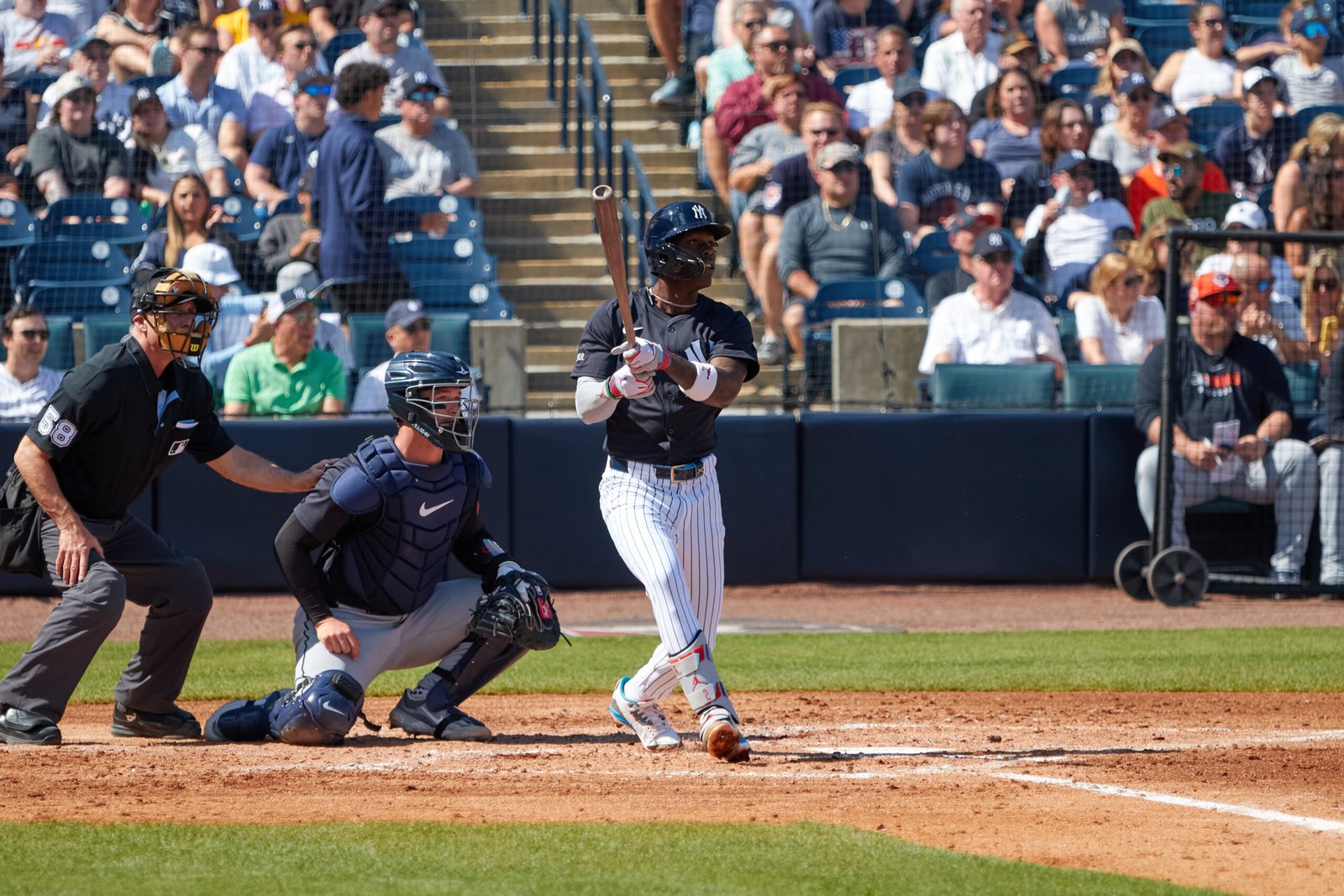
The New York Yankees did not have a disastrous week, but they did have the kind of week that exposes the difference between being a good team and playing like a complete one. From May 10 through May 16, the Yankees went 2-4, scored 19 runs, allowed 24, and enter Sunday’s Subway Series finale at 28-18. The results were uneven: a 4-3 loss to Milwaukee, a 3-2 loss to Baltimore, a 6-2 win over the Orioles, a 7-0 shutout loss, a 5-2 win over the Mets, and a 6-3 loss at Citi Field. That is not enough to change the big-picture outlook of a first-place caliber roster, but it is enough to reveal the cracks that have started to show.
The biggest issue this week was not that the Yankees were incapable of scoring. It was that their offense became too dependent on isolated innings rather than sustained pressure. Over the six completed games, they averaged just 3.17 runs per game and scored three runs or fewer four times. That kind of offensive profile is dangerous because it puts every defensive mistake, every walk, and every bullpen decision under a microscope. The Yankees did collect 10 hits in Friday’s 5-2 win over the Mets and nine hits in Saturday’s 6-3 loss, but the run production still came in waves instead of consistently across nine innings.
From an analytical standpoint, this is where the Yankees’ week becomes more concerning than the raw record. The underlying quality at the top of the roster remains elite. Aaron Judge, for example, continues to grade as one of the most dominant batted-ball hitters in baseball, carrying a .432 xwOBA, 56.2% hard-hit rate and 23.8% barrel rate on Baseball Savant. Those numbers show that the Yankees still have a true offensive engine in the middle of the order. The problem is that the lineup around him has not consistently converted traffic into runs, and the bottom/middle portion of the order has been too prone to empty at-bats.
Jazz Chisholm Jr.’s ongoing slump is one example of why the offense has looked thinner than expected. His production has cratered to a 72 wRC+, with a .200/.280/.320 slash line and a 29.2% strikeout rate, while the Statcast indicators suggest the quality of contact has fallen sharply. His barrel rate has dropped to 5.9%, his hard-hit rate to 35.3%, and his xwOBA to .263. For a Yankees lineup built around power, athleticism and length, that kind of decline from a high-impact regular changes the entire offensive shape.
The Yankees’ pitching staff also had a turbulent week, and the concern is less about the full-season numbers than the current health and stability of the rotation. Max Fried landing on the 15-day injured list with a left elbow bone bruise is the biggest development. Fried allowed 11 earned runs and 17 hits over 14 1/3 innings in three May starts after opening the season 4-1 with a 2.09 ERA through March and April. That is a significant short-term blow because Fried had been one of the stabilizing forces of the rotation, and his injury forces the Yankees to rely more heavily on depth arms at a time when Gerrit Cole is still working back through his rehab progression.
Carlos Rodón’s start against the Mets added another layer to the concern. He struck out six in 3 2/3 innings, but three walks, a wild pitch and a costly defensive mistake helped turn a winnable game into a 6-3 loss. That kind of outing is analytically frustrating because the swing-and-miss ability is still visible, but the command profile is not yet sharp enough to consistently work deep into games. When a starter has strikeout stuff but cannot control counts, the bullpen gets exposed earlier, the defense gets pressured, and one bad inning becomes enough to swing the entire game.
There were positives. Cam Schlittler’s continued emergence remains one of the most important stories of the season. Friday’s 5-2 win over the Mets moved him to 6-1 with a 1.35 ERA, according to MLB’s scoreboard, and that matters because the Yankees badly need reliable length while Fried is sidelined and Cole is still building back. Schlittler has given the Yankees exactly what every contending team needs during an injury wave: real innings, run prevention and the ability to stop a skid.
Still, the week showed that the Yankees have three problems to solve. First, they need more consistent contact quality from the non-Judge portion of the lineup. The solution is not simply “be more aggressive” or “hit more home runs.” It is about attacking hittable pitches earlier in counts, especially with runners on base, and avoiding passive plate appearances that allow opposing pitchers to steal strike one. Chisholm is the clearest adjustment candidate because the bat speed and athleticism are still there, but the Yankees need his swing decisions and launch profile to move back toward his 2025 form.
Second, the Yankees need to protect the rotation while Fried is out. Elmer Rodriguez can help bridge the gap, and his Triple-A performance gives the Yankees a reason to believe there is upside: he owns a 1.38 ERA in five Triple-A starts this season, even though his early MLB work has been uneven. The key is not asking him to be Fried. It is asking him to give competitive five-inning starts, limit free passes and keep the bullpen from being overexposed.
Third, the Yankees need to tighten the run-prevention details. Saturday’s loss to the Mets was a reminder that walks, wild pitches, defensive mistakes and poor sequencing can erase strong raw stuff. This is where the Yankees can make immediate improvements without a trade: cleaner defensive execution, quicker bullpen hooks when command disappears, and more game-planning emphasis on avoiding the one crooked inning that defined multiple losses this week. The overall conclusion is simple: the Yankees are still in a strong position, but this past week was a warning. Their record remains excellent, their star-level talent remains obvious, and Judge’s underlying metrics still give the lineup an MVP-level foundation. But the margin for error shrinks quickly when the offense becomes top-heavy, Fried lands on the injured list, Rodón is still searching for command, and the team is averaging barely over three runs per game across a week. The fix is not a panic move. It is a combination of internal offensive adjustments, protecting the rotation with smarter depth usage, and cleaning up preventable mistakes. If the Yankees do that, this week will look like a temporary dip. If they do not, the same flaws could become a much larger problem as the AL East race tightens.