The New York Yankees Blinked: Why a Timid Trade Deadline Should Terrify Fans
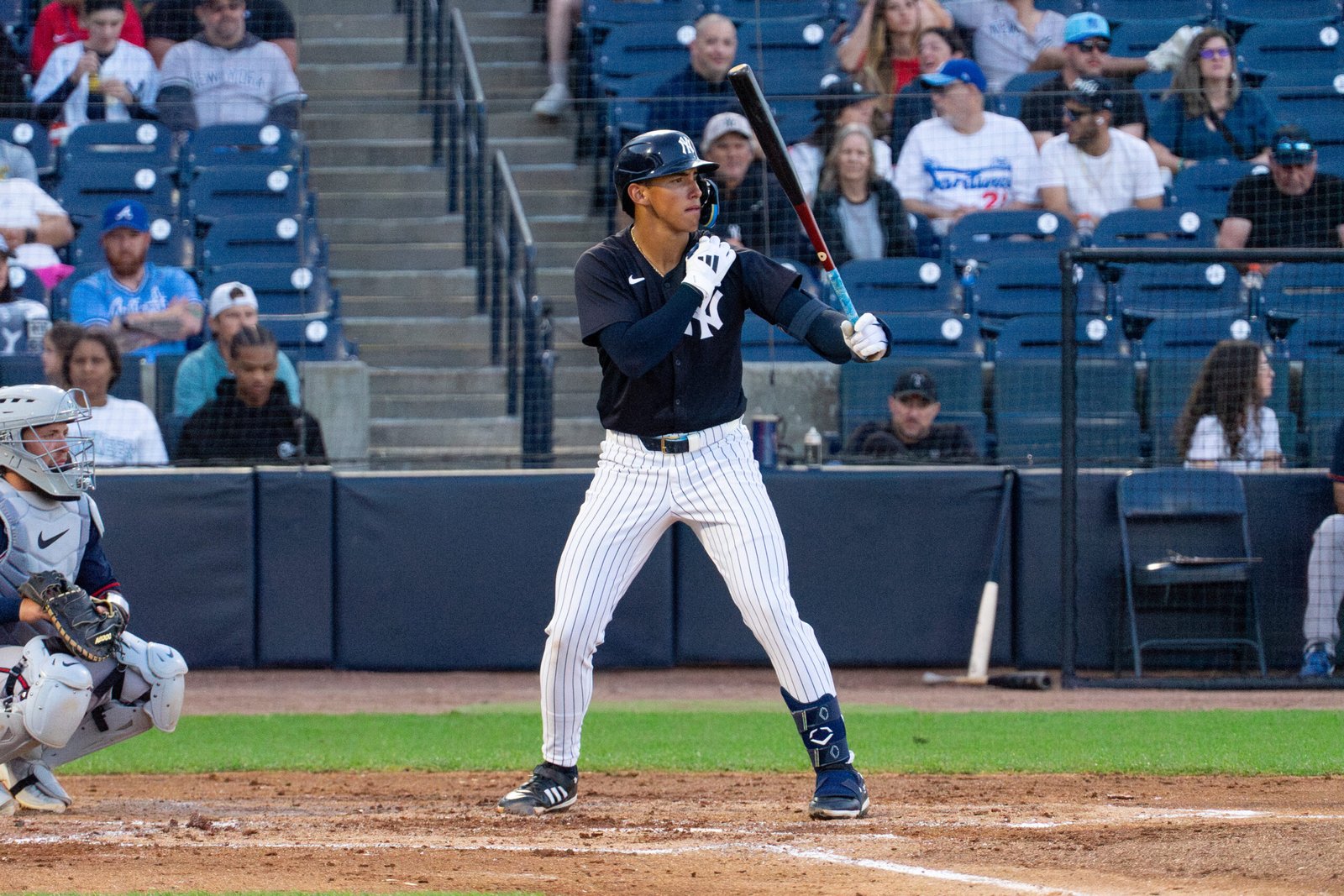
Monday came and went, and the New York Yankees walked away from the 2026 trade deadline with another first baseman, an outfielder with a lefty-mashing skill set, and a top prospect they were always going to promote anyway. That’s it. That’s the return on a season in which the offense has been nearly unwatchable.
Luis Garcia Jr. and Heliot Ramos are not bad players. Garcia arrives from Washington having led the National League in slugging percentage, and Ramos gives the Yankees a right-handed bat who can actually hit left-handed pitching, something this roster has lacked all year. George Lombard Jr., the club’s top prospect, getting the call as part of a roster shuffle with Anthony Volpe is a legitimately exciting development for the organization’s future. But “the future” is not supposed to be the headline at a trade deadline for a team that entered August in a playoff spot with legitimate championship aspirations. It’s supposed to be about right now.
Right now, the Yankees still don’t have a right-handed-hitting catcher to platoon with Austin Wells. They still don’t have the shutdown reliever this bullpen has needed since Camilo Doval’s volatility became impossible to ignore. A problem the front office solved, bizarrely, by shipping Doval to Pittsburgh instead of fixing him or replacing him with someone better. Brian Cashman said ahead of the deadline that George Lombard Jr. was “untouchable,” which is a defensible organizational stance in a vacuum. It is far less defensible when the alternative was standing pat while half the American League got dramatically better.
Everyone Else Went and Got Something
Look around the division and the league, and the Yankees’ restraint looks less like discipline and more like a franchise unwilling to spend what it takes to win.
The Boston Red Sox delivered the single biggest shock of the deadline, landing All-Star catcher Adley Rutschman from Baltimore in a deal. That’s a division rival fixing a premium position with a genuine star for the stretch run and beyond.
The Los Angeles Dodgers, already the sport’s superteam, added two-time Cy Young winner Tarik Skubal from Detroit to a rotation that didn’t need the help and got it anyway. They also brought in Kris Bubic from Kansas City. The rich got richer because the Dodgers understand that “good enough” is never actually good enough in October.
The Tampa Bay Rays, operating on a fraction of New York’s payroll, still found a way to acquire Freddy Peralta from the Mets and add bullpen depth in Tyler Wells from Baltimore. If a small-market club can find the aggression to upgrade its rotation for a playoff push, there’s no excuse for a franchise with the Yankees’ resources to sit largely on its hands.
The Pittsburgh Pirates…The Pirates….were one of the more active teams in baseball at the deadline, adding Camilo Doval, Luke Weaver and Kirby Yates to remake their bullpen. Say what you want about where Pittsburgh sits in the standings; the front office showed more urgency in 48 hours than the Yankees showed all season.
Even the Toronto Blue Jays, picking through the wreckage of a disappointing season, brought in starting pitching in Jose Soriano and Jameson Taillon to retool for a push. A team with real questions about its own direction still found ways to get more aggressive than the Yankees did.
Is This Still Cashman’s Team to Win With?
Brian Cashman has been the Yankees’ GM for nearly three decades and has presided over exactly one championship since 2000. That’s not a new observation; it’s the backdrop against which every deadline like this one gets judged. Protecting a farm system is a legitimate long-term strategy. But at some point, the job of a GM overseeing a $300 million-plus payroll, with a genuine championship window sitting right in front of him, is to close the gap between “good roster” and “team that wins in October.” This deadline did not close that gap. If anything, trading a useful, if maddening, power arm in Doval without bringing back a clear bullpen upgrade widened it.
There’s a fair question buried in all of this about whether Cashman, at this stage of his tenure, still has the appetite for the kind of aggressive, uncomfortable dealing that wins championships. The kind of move that requires genuinely gutting a farm system rather than picking around its edges. Nothing about this deadline suggests he does.
The Hal Steinbrenner Problem
None of this happens in a vacuum. George Steinbrenner built the Yankees’ brand on ruthless, sometimes reckless, win-now urgency. Whatever else you want to say about the man, nobody around that organization was ever confused about whether ownership demanded a championship every single year. Hal Steinbrenner has run the franchise in almost the opposite spirit: fiscally disciplined, publicly measured, allergic to the kind of splashy, all-in behavior that defined his father’s era.
That approach has real costs. The Yankees have not won a World Series since 2009. A drought now spanning parts of three different decades for a franchise that used to treat anything short of a title as organizational failure. Under Hal, the Yankees have become a model of financial sustainability and a case study in competitive comfort. Comfort is not a word that should ever be associated with the Yankees. Under George Steinbrenner, it never was.
A front office that lets a farm system’s status take priority over a stretch-run bullpen fix. A GM operating with total organizational security regardless of postseason outcomes. A manager in Aaron Boone who has never really been forced to answer for how this roster underperforms its talent level in the moments that matter most. All of it points to the same diagnosis: this organization has gotten too comfortable, and comfort does not win championships.
What Needs to Change
If the Yankees fall short again this October, and this deadline did nothing to meaningfully improve their odds of not falling short, ownership needs to stop treating the manager’s office and the front office as untouchable. Boone’s seat should be on notice. Cashman’s decision-making, and the organizational philosophy that shapes it, needs real scrutiny rather than the annual pass it tends to receive. And Hal Steinbrenner needs to ask himself honestly whether running the Yankees like a well-managed business is compatible with running it like a team that’s supposed to win championships, because right now, it clearly isn’t.
The Yankees didn’t lose the trade deadline on paper. Garcia and Ramos are real players who will help. But they lost it in spirit, in urgency, and in the widening gap between what this organization is willing to do and what its rivals are willing to do to win now. Until that changes, at the GM level, in the manager’s office, or at the very top of the organizational chart, 2009 is going to keep getting further away, not closer.